

Is 2T the Same as 24 Months? The Surprising Truth Parents Must Know
Introduction
You are standing in the toddler aisle, staring at two tags that look almost identical. One says “24M.” The other says “2T.” Your little one just hit their second birthday, and you are not sure which one to grab. Sound familiar?
Here is the thing: most parents assume 2T and 24 months are exactly the same size. It feels logical. Two years old equals 24 months, right? But that assumption can lead to clothes that are too snug, too baggy, or just plain wrong for your child’s body at this stage.
Is 2T the same as 24 months? The short answer is no — but the full answer is more interesting than you might expect. In this article, you will learn exactly how these sizes differ, why clothing brands label them separately, which one fits your toddler better, and how to shop confidently without making costly mistakes. Let’s break it down clearly.
What Does “24 Months” Actually Mean?
The label “24M” or “24 months” is part of the baby sizing system. It is designed for infants and babies who are approaching their second birthday but are not quite in the toddler stage yet.
Here is how baby sizing generally works:
- It is cut wider and shorter to accommodate a baby’s rounder belly
- It leaves room for a diaper (which is a big deal at this age)
- It runs slightly larger than its number suggests — a 24-month outfit often fits babies between 18 and 24 months
So when you see “24 months” on a tag, the brand is really saying: this is built for a baby who still wears diapers and has that classic baby body shape.
The Diaper Factor
This is the most important distinction. Baby-sized clothes — including the 24-month cut — are built with extra room in the seat and hips. That space exists specifically for a diaper. If your child is still in diapers, this extra room matters a lot. Without it, clothes can feel tight and uncomfortable in all the wrong places.
What Does “2T” Mean?
The “T” in 2T stands for Toddler. This is a completely different sizing category even though the number is the same.
Toddler sizing is designed for children who:
- Have transitioned out of diapers (or are in the process)
- Have a leaner, more upright body shape
- Are moving around more actively and need more range of motion
A 2T garment is typically cut with a slimmer seat, a longer torso, and longer legs compared to a 24-month piece. It is made for a child who is walking, running, climbing, and no longer needs that diaper-friendly extra room.
Key Physical Differences at a Glance
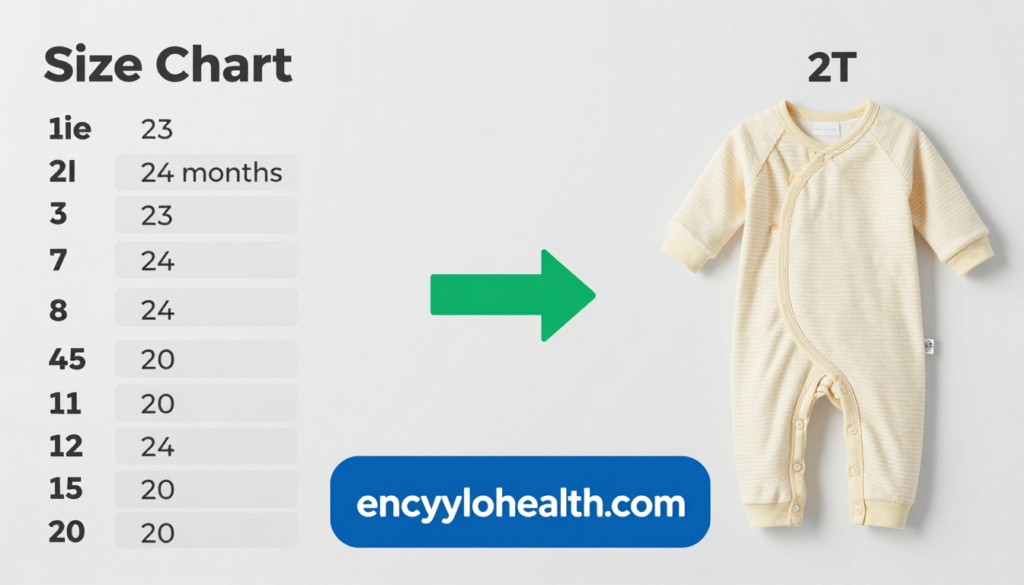
| Feature | 24 Months | 2T |
|---|---|---|
| Seat/Hip Room | Extra wide (diaper room) | Slimmer cut |
| Torso Length | Slightly shorter | Slightly longer |
| Leg Length | Shorter | Longer |
| Best For | Babies still in diapers | Potty-trained toddlers |
| Age Range | 18–24 months typically | 2–3 years typically |
Is 2T the Same as 24 Months? The Direct Answer
No, 2T is not the same as 24 months, even though they are close in size. The key differences come down to three things: cut, proportions, and who the garment is designed for.
Think of it this way. A 24-month outfit is the last stop in baby sizing. A 2T outfit is the first stop in toddler sizing. They are neighboring categories, not identical ones.
That said, the actual size difference is small. In some brands, a 24-month item and a 2T item will fit the same child during a transitional period. But as a rule, they are not interchangeable — especially if your child is in diapers or has a particularly lean or chunky build.
Why Do Brands Use Both Labels?
Great question. You might wonder: if they are so close in size, why do clothing brands bother with two separate labels?
The answer is that it helps parents shop more accurately based on their child’s development, not just their age. A two-year-old who is still in diapers has different fit needs than a two-year-old who has been potty-trained for months. Using two labels lets brands (and parents) match clothes to body shape rather than just birthday count.
Some brands make this even more confusing by sizing inconsistently. A 2T from one brand might fit the same as a 24M from another. This is why checking the brand’s actual size chart — based on height and weight — is always smarter than going by the label alone.
How to Know Which Size Your Toddler Needs
Here is a practical way to figure out which size is right for your child right now.
Step 1: Check the Diaper Status
Ask yourself: is my child still in diapers?
- Yes, still in diapers: Go with 24 months. The extra room in the seat will make a real difference in comfort.
- No diapers or in training pants: Try 2T. The slimmer cut will fit better and not bunch up awkwardly.
Step 2: Measure Your Child
Pull out a soft measuring tape and check:
- Height: Most 24M clothes fit children around 32–34 inches tall. Most 2T clothes fit children around 33–36 inches tall.
- Weight: 24M typically fits children around 26–30 pounds. 2T fits roughly 27–32 pounds.
These ranges overlap, which is why the transition period can feel confusing. Your child’s height and weight together will tell you more than their age alone.
Step 3: Try Both in the Store
When you can, bring your toddler to the store and try on a piece from each category. Watch for:
- Can they move freely at the hips and thighs?
- Is the crotch area comfortable and not pulling?
- Does the torso hit the right length without bunching or riding up?
Those observations will tell you more than any label.
Common Sizing Mistakes Parents Make
Shopping for toddlers is genuinely tricky. Here are the most common mistakes parents make — and how to avoid them.
Buying by Age Alone
Your child’s age and clothing size are not the same thing. A two-year-old who is tall and lean will fit differently than a two-year-old who is shorter and stockier. Always measure first.
Ignoring the Brand’s Size Chart
Every brand sizes differently. What one brand calls “2T,” another brand might call “24M.” The label is just a starting point. The actual measurements on the brand’s size chart are what matter.
Buying Too Far Ahead Without Measuring
Parents often buy ahead to save money during sales. This makes sense, but if you buy 2T for a baby who is still 14 months old, you might find the clothes fit awkwardly in six months depending on how your child grows. Buy ahead by one size at most, and focus on seasonal fit rather than just future age.
Overlooking Fabric Stretch
Knit fabrics (like jersey cotton) stretch and forgive. Woven fabrics (like denim or structured pants) do not. A 24M pair of denim jeans can feel very different from a 24M cotton playsuit — even from the same brand. Factor in fabric type when sizing up or down.

Transitioning Between 24 Months and 2T
Most toddlers go through a period where they fit comfortably in both sizes. This typically happens between 18 and 30 months. During this transition:
- Use 24M for bottoms (especially pants) if your child is still in diapers
- Use 2T for tops, which are less affected by diaper fit
- Mix sizes within the same outfit if needed — there is no rule that says everything has to match in size category
This overlap period is completely normal. You do not need to commit to one category or the other. Buy what fits your child’s actual body right now.
Does the Brand Matter?
Absolutely. Sizing consistency across brands is one of the biggest frustrations for parents of toddlers. Here is a general rule of thumb:
- Budget brands (like some supermarket labels or fast fashion) often run smaller
- Premium or European brands tend to run larger — sometimes significantly
- Carter’s (a widely trusted children’s brand) typically has a noticeable difference between their 24M and 2T cuts
- Old Navy and Gap tend to run large, so a 24M might fit a child who is well past their second birthday
I always suggest checking reviews on the brand’s website before buying online. Other parents are usually very specific about whether a size runs true, large, or small — and that information is gold when you are shopping blind.
Quick Reference: 2T vs 24 Months Summary
Here is everything you need to remember in one spot:
- 24 Months is baby sizing — designed with diaper room and a rounder cut
- 2T is toddler sizing — slimmer, longer, and built for active movement
- They are not the same size, even though they are close
- Your child’s diaper status is the biggest deciding factor
- Always check the brand’s size chart using height and weight
- During the transition period, mixing sizes within an outfit is perfectly fine
- Fabric type affects fit as much as the size label does
Conclusion
So, is 2T the same as 24 months? Now you know the real answer — they are close, but not identical. The difference is small in measurement but meaningful in fit, especially when diapers are still in the picture.
Shopping for toddlers does not have to be a guessing game. Measure your child, check the brand’s chart, and consider where they are in their development right now. Once you understand the logic behind these two labels, you will feel far more confident in the store (or online).
Have you run into sizing confusion with your toddler? Drop your experience in the comments — your tip might save another parent from a frustrating return trip. And if you found this helpful, share it with a parent friend who is navigating the same stage right now.
Frequently Asked Questions
1. Is 2T the same as 24 months in all brands? No. While they are similar in size, 2T is cut slimmer with less room in the seat, while 24 months has extra space for diapers. The difference varies by brand, so always check the size chart.
2. Can my child wear 2T if they are still in diapers? It depends on the fit. 2T has less room in the seat, so it can feel tight over a diaper. If your child is in diapers, 24 months usually fits more comfortably.
3. What age does 2T fit? 2T is generally designed for children between 2 and 3 years old, roughly 33 to 36 inches tall and 27 to 32 pounds. But actual fit depends on your child’s build.
4. What is bigger — 24 months or 2T? 24 months is slightly wider in the seat and hips due to the diaper allowance. 2T is slightly longer in the torso and legs. Neither is definitively “bigger” — they are shaped differently.
5. Should I skip 24 months and go straight to 2T? If your child has already potty-trained, you can move to 2T. If they are still in diapers, 24 months will typically fit better until they transition.
6. Why does my child fit 2T in tops but 24 months in bottoms? This is very common. Tops are less affected by diaper fit, so 2T works well there. Bottoms, especially pants, need the extra diaper room that 24M provides.
7. Are 24 months and 2T interchangeable for onesies? Not ideally. Onesies snap at the crotch, so the extra room in 24M makes a real difference for diaper comfort. A 2T onesie can feel tight under a diaper.
8. How do I know when to stop buying 24M clothes? When your child potty-trains or when their height consistently exceeds 34 inches, it is usually time to move fully into 2T sizing.
9. Do all clothing brands label sizes the same way? No. Some brands skip 24M altogether and jump from 18M to 2T. Others use 24M and 2T as nearly identical sizes. Always rely on the brand’s specific measurement chart.
10. Is European sizing different from US toddler sizing? Yes. European brands often size by height in centimeters and tend to run larger than US sizing. A European “92” roughly corresponds to a 2T in the US, but always compare measurements.
also read: encyclohealth.com
email: johanharwen@314gmail.com
Author Name: Sarah Mitchell
About the Author: Sarah Mitchell is a parenting writer and mother of three with over eight years of experience covering child development, baby gear, and family lifestyle topics. She specializes in making complex parenting decisions feel simple and approachable. Her work has appeared in several parenting publications, and she writes from both research and real-life experience raising kids through every messy, wonderful stage.
