Secret Mall Apartments: The Hidden Homes That Actually Exist Inside Shopping Centers 2026
Introduction
What if someone told you that people actually live inside shopping malls — not just sleeping in a store after closing time, but genuinely living in fully furnished, hidden apartments tucked away behind unmarked doors? It sounds like something out of a movie, but secret mall apartments are very much a real thing. And honestly, once you start digging into this topic, it’s hard not to get completely fascinated by it.
A secret mall apartment is exactly what it sounds like: a private living space hidden within the walls of a commercial shopping center. These spaces have popped up across the United States and around the world, whether built intentionally by creative individuals, used secretly by clever squatters, or repurposed from old mall infrastructure. Some are cozy little hideaways. Others are surprisingly well-equipped homes.
In this article, you’ll learn where these apartments come from, the most famous examples ever discovered, what living in one might actually feel like, and why the idea of a secret mall apartment continues to capture people’s imaginations worldwide.
What Exactly Is a Secret Mall Apartment?
A secret mall apartment is a hidden residential space located inside a shopping mall, usually in an area that isn’t publicly accessible. These spaces might be tucked behind utility corridors, nestled above storefronts, hidden in unused storage areas, or built into the dead zones of large commercial buildings that shoppers never see.
Malls are surprisingly full of unused space. The average large American shopping mall has millions of square feet of floor space, and a significant portion of that is never visible to customers. Maintenance corridors, old service tunnels, forgotten storage rooms, and spaces above drop ceilings can all theoretically be converted into livable areas.
The term “secret mall apartment” gained widespread attention after a famous real-life story broke in the early 2000s. But the concept itself — hiding a living space inside a massive commercial building — has existed for decades in various forms.
The Most Famous Secret Mall Apartment Ever Discovered
Michael Townsend and the Providence Place Mall
The most well-documented secret mall apartment story comes from Providence, Rhode Island. In 2003, a man named Michael Townsend and a group of friends secretly built and lived in a hidden apartment inside the Providence Place Mall. They used an unused utility space on the fourth level of the parking garage that connected to the mall structure.
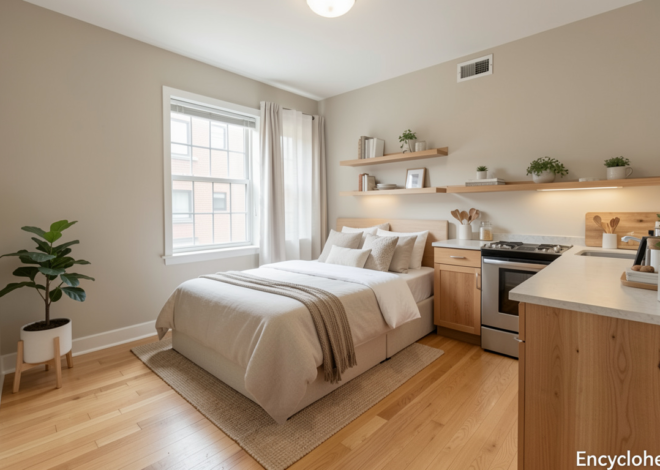
What makes this story so remarkable isn’t just the concept — it’s the execution. Townsend and his group didn’t just camp out. They built a fully functioning secret mall apartment complete with furniture, a television, game consoles, a couch, rugs, and even artwork on the walls. They had electricity tapped from the mall’s power supply. They had a microwave. They lived there, on and off, for about four years before security finally discovered them in 2007.
When mall security found the space, they were reportedly stunned. The apartment looked comfortable. It looked lived in. It looked like a home.
Townsend, who was an artist, framed the project as an art installation and social experiment. He documented the entire thing with photos and notes. Mall management pressed charges, and he eventually received a no-trespassing order. But the story went viral and permanently cemented the idea of the secret mall apartment into popular culture.
Why Do Secret Mall Apartments Exist?
The Practical Reasons
There are a few different reasons why people have created or discovered these hidden living spaces.
Affordable housing pressure plays a huge role. In cities where rent is sky-high, some people have sought creative and unconventional solutions. A mall with dead space and reliable electricity can look like a surprisingly practical option to someone who’s desperate or adventurous enough.
Accessibility is another factor. Large malls are open to the public for long hours. They have heating and cooling systems, restrooms, food courts, and security that mostly focuses on shoppers rather than internal spaces. For someone who knows the layout well — like a former maintenance worker or a long-time visitor — slipping into a hidden area might feel less impossible than it sounds.
Artistic and social commentary also drives some of these projects. Like Townsend, some people create secret living spaces as a statement about consumerism, housing inequality, or urban space. Living secretly inside the ultimate symbol of consumer culture has a certain poetic irony to it.
The Accidental Discoveries
Not every secret mall apartment is built by someone sneaking around. Some are discovered by urban explorers, maintenance crews, or new management teams who find rooms that have simply been forgotten over time. Malls are large, complex structures. Ownership changes hands. Renovations happen. Sometimes a room gets sealed off and nobody updates the blueprints.
Urban explorers — people who explore abandoned or off-limits structures — have documented dozens of strange, furnished spaces inside old and dying malls. Not all of them qualify as apartments, but some are surprisingly detailed, suggesting someone once used them regularly.
What Would Life in a Secret Mall Apartment Actually Look Like?
Let’s be honest — the romantic idea of living secretly inside a mall sounds kind of thrilling. But what would it actually be like day to day?
The Upsides (Yes, There Are Some)
If you’re the kind of person who loves people-watching, a secret mall apartment puts you at the center of constant activity. You’d have access to food courts, shops, and restrooms just steps away. Climate control would likely be excellent. You’d never have to worry about a cold apartment in January.
Depending on where your hidden space is located, you might have access to the mall’s Wi-Fi network. You’d be surrounded by entertainment options. There’s something almost appealing about the self-contained nature of mall life — everything you need is theoretically nearby.
Michael Townsend reportedly described his time in the Providence Place secret mall apartment as surprisingly comfortable. The group settled into routines. They ate at the food court. They shopped like regular customers. Nobody suspected a thing for years.
The Obvious Downsides
The challenges are significant, though. You’d have no legal right to be there. Getting caught means trespassing charges, possible fines, and a permanent ban from the property. Privacy would be minimal. You’d need to come and go carefully, making sure nobody saw you entering your hidden space.
Ventilation could be a serious issue depending on where the apartment sits. Noise from the mall itself — particularly during holiday seasons — would be relentless during open hours. You’d need to manage waste carefully and be creative about bathing.
And of course, malls close. What happens to you when the lights go off and security starts making rounds?
Living in a secret mall apartment is less a lifestyle and more a very intense, legally risky experiment.
Secret Mall Apartments in Pop Culture and Online Communities

The idea has taken on a life of its own beyond the real-world examples. Reddit communities dedicated to liminal spaces, abandoned places, and urban exploration regularly feature posts about hidden mall rooms. A post about a secret mall apartment can rack up tens of thousands of upvotes almost instantly.
Part of the appeal is the dreamlike quality of the concept. Malls already have a strange, nostalgic atmosphere for many people. The image of a cozy, secret room hidden inside that environment — complete with furniture, warm lighting, and personal belongings — hits something deep in the imagination. It feels like a secret world.
The “backrooms” internet phenomenon, which imagines endless liminal spaces hidden behind the walls of familiar places, draws heavily on this same psychological territory. The secret mall apartment fits perfectly into that aesthetic.
Several YouTube documentaries and short films have covered Townsend’s Providence story specifically. The combination of actual documentation — real photos, real floor plans, a real couch sitting in a real mall utility room — makes it feel both surreal and completely believable.
Are There Other Examples Around the World?
International Discoveries
While the Providence Place story is the most famous, it’s not the only example of hidden living spaces inside commercial buildings.
In various parts of Europe, urban explorers have found furnished rooms inside large shopping complexes that showed signs of habitation. Some appeared to have been used by security staff or maintenance workers who wanted a private rest area. Others were more mysterious.
In parts of Asia, particularly in cities with extreme housing costs like Hong Kong and Tokyo, there have been documented cases of people converting commercial spaces — not always malls specifically, but large retail buildings — into unauthorized living quarters. The housing pressure in these cities is so intense that creative solutions, legal or otherwise, have become normalized to a degree.
The “Dead Mall” Phenomenon
As American malls have increasingly emptied out over the past two decades, the potential for secret or forgotten spaces has only grown. Dying malls often have large sections that are completely unoccupied. Security is reduced. Foot traffic drops. The sheer amount of dead space inside these structures creates opportunities that simply didn’t exist when they were thriving.
Urban explorers who document dead malls have found everything from abandoned dentist offices to old movie theater equipment rooms to what appear to be makeshift sleeping areas. The secret mall apartment as a concept feels especially at home in the age of the dying mall.
The Ethical and Legal Questions
It’s worth being clear here: creating or living in a secret mall apartment without permission is trespassing. Full stop. It doesn’t matter how creative or artistic the project is, or how unused the space appears to be. The building belongs to someone, and using it without their knowledge or consent is illegal.
That said, the ethical questions around this concept are genuinely interesting. When a massive commercial property sits half-empty, and housing costs in the surrounding city are unaffordable for many residents, what does it mean that someone found warmth, shelter, and safety in an unused utility room? Those aren’t questions with easy answers.
Townsend’s framing of his project as art opened up a conversation about space, ownership, and consumer culture that plenty of people found worthwhile — even if the mall’s management understandably didn’t.
If you’re drawn to the idea of a secret mall apartment purely for the adventure, the smarter and legal version of this interest is urban exploration with proper permission, or participating in the growing “right to roam” and adaptive reuse conversations happening in urban planning circles.
What Mall Developers Think About Hidden Spaces
Modern mall developers are well aware that their buildings contain potential blind spots. Security systems have become increasingly sophisticated, with better camera coverage, more thorough mapping of utility spaces, and tighter access protocols for maintenance corridors.
The Providence Place incident was actually a turning point for many mall operators who suddenly realized their security models focused almost entirely on shoppers and storefronts — not on the hidden infrastructure of the buildings themselves.
Since then, regular audits of unused spaces have become more common. Some malls have deliberately repurposed their dead zones, converting old storage areas into pop-up retail spaces, community rooms, or employee facilities. In a way, the secret mall apartment story pushed the industry toward being more aware of its own real estate.
Could a Legal Secret Mall Apartment Ever Exist?
Here’s where things get interesting. Adaptive reuse — the practice of converting commercial buildings into residential ones — is one of the hottest trends in urban planning right now. Entire office towers are being converted into apartments. Old factories have become lofts. Warehouses are now condos.
Could a mall legitimately be converted into a mixed-use space with actual apartments? Absolutely. In fact, it’s already happening. Several dying malls in the United States have been partially converted into housing developments, with residential units built into or adjacent to the original structure.
A legal “mall apartment” wouldn’t be secret, of course. But it would carry some of the same fascinating qualities — living within the bones of a commercial space, surrounded by retail history, with an unusual relationship to the building you call home.
The secret mall apartment of the future might just be a permitted one.
Conclusion
The secret mall apartment is one of those concepts that lodges itself in your brain and refuses to leave. Whether you first heard about Michael Townsend’s wild four-year experiment in Providence, stumbled across photos in a Reddit thread, or just found yourself wondering what’s behind all those unmarked doors in your local shopping center — this idea taps into something genuinely compelling about hidden spaces, unconventional living, and the vast, forgotten infrastructure of consumer culture.
What these stories really remind us is that the built environment around us is stranger and more layered than it appears on the surface. Malls aren’t just stores and food courts. They’re enormous, complex structures full of rooms and corridors and forgotten corners that most people never think about.
The secret mall apartment captures that mystery perfectly. It’s the ultimate hidden world sitting in plain sight.
Would you ever consider living in a space like this — legally or otherwise? And if you found out a hidden apartment existed in your local mall right now, what would you actually do about it? Share your thoughts, pass this along to someone who loves unusual stories, and keep exploring the strange edges of the world around you.
Frequently Asked Questions
1. What is a secret mall apartment? A secret mall apartment is a hidden living space built or discovered inside a shopping mall, usually in unused utility areas, storage rooms, or maintenance corridors not accessible to the public.
2. Who built the most famous secret mall apartment? Artist Michael Townsend built a hidden apartment inside the Providence Place Mall in Rhode Island around 2003. He and friends lived there on and off for nearly four years before being discovered in 2007.
3. Is living in a secret mall apartment illegal? Yes. Occupying any part of a private building without the owner’s permission is trespassing, regardless of whether the space appears unused.
4. How did Michael Townsend’s secret apartment get discovered? Mall security eventually found the space during a routine check. The apartment had furniture, electronics, and personal belongings. Townsend received a no-trespassing order after the discovery.
5. Are there other secret mall apartments besides the Providence one? Urban explorers have documented various hidden furnished spaces inside malls and large commercial buildings worldwide, though none are as thoroughly documented as the Providence Place example.
6. Why do malls have so much unused hidden space? Large malls are built with extensive utility infrastructure — maintenance corridors, mechanical rooms, storage areas — that customers never see. As malls age or lose tenants, these spaces often go unmonitored.
7. What did Michael Townsend’s secret mall apartment look like inside? It had a couch, television, game consoles, a microwave, rugs, and artwork. It was described as comfortable and fully functional, with electricity tapped from the mall’s supply.
8. Could you legally live in a mall apartment? Not in a traditional secret sense, but mall-to-residential conversions are a real trend. Some dying malls are being legally converted into mixed-use developments with actual housing units.
9. Why do people find secret mall apartments so fascinating? They combine the familiar, nostalgic atmosphere of malls with the thrill of hidden spaces and unconventional living. The concept resonates deeply with interests in liminal spaces, urban exploration, and creative housing.
10. What happened to Michael Townsend after his secret mall apartment was found? He received a no-trespassing order from mall management. The project gained widespread media attention and is now considered a notable piece of guerrilla art and social commentary.
Also Read: New Zealand vs England
| Author: Johan Harwen |
| E-mail: johanharwen314@gmail.com |
| Bio: Johan Harwen is a passionate tourist who has explored countless destinations across the globe. With an eye for hidden gems and local cultures, he turns every journey into an unforgettable story worth sharing. |