Realtor vs Real Estate Agent: Shocking Truth You Must Know 2026
Introduction
When you start looking for help buying or selling a home, you will likely hear two terms thrown around constantly. People use realtor vs real estate agent as if they mean the same thing. But they do not. Understanding the difference can actually save you time, money, and a lot of frustration. Many buyers and sellers make the mistake of choosing the wrong professional simply because they never stopped to ask the right questions. In this article, you will learn exactly what separates these two roles, why it matters for your property journey, and how to pick the right person for your needs. Whether you are buying your first home or your fifth investment property, this guide gives you the clarity you deserve.
What Is a Real Estate Agent?
A real estate agent is a licensed professional. They help people buy, sell, or rent properties. To become an agent, a person must pass a state licensing exam. They must also complete required training hours before they can legally work.
Every real estate agent holds a valid license issued by their state. However, not every agent is a realtor. This is where most people get confused. The license gives them the legal right to practice. But the title of realtor means something more.
What Makes a Realtor Different?
A realtor is a real estate agent who has taken an extra step. They have joined the National Association of Realtors, also known as NAR. This membership is voluntary. But it comes with serious responsibilities.
When someone becomes a realtor, they commit to a strict Code of Ethics. This code protects buyers and sellers. It holds realtors to a higher standard than a basic license requires. Think of it this way. Every realtor is a real estate agent, but not every real estate agent is a realtor.
The Key Differences You Need to Know
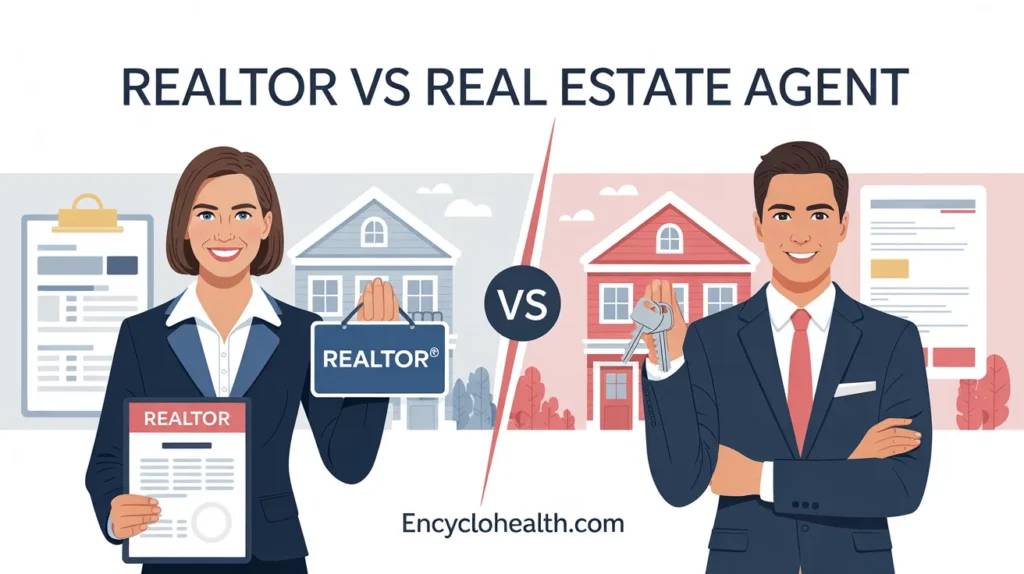
Let us break this down clearly so you can see the comparison side by side.
Real Estate Agent:
- Holds a state-issued license
- Can legally represent buyers and sellers
- Not required to follow NAR’s Code of Ethics
- May or may not belong to a professional association
- Training requirements vary by state
Realtor:
- Holds a state-issued license plus NAR membership
- Must follow NAR’s strict Code of Ethics
- Has access to exclusive real estate databases and tools
- Participates in ongoing professional education
- Can use the trademarked title “Realtor”
The NAR Code of Ethics covers 17 articles. These articles protect clients and ensure fair treatment. When you hire a realtor, you gain an extra layer of accountability.
Why Does the Realtor vs Real Estate Agent Debate Actually Matter?
You might wonder if this difference is just a technicality. It is not. When money and property are involved, professional standards matter enormously.
If a real estate agent behaves unethically, your main option is to file a complaint with the state licensing board. But if a realtor violates the Code of Ethics, you can also report them to the NAR. This gives you two levels of protection instead of one.
I have spoken to many first-time buyers who regret not asking this question upfront. One couple told me their agent never disclosed a conflict of interest. A realtor bound by the Code of Ethics must disclose such conflicts. That simple membership can make a real difference in your experience.
How to Verify If Someone Is a Realtor
You can verify any professional’s status easily. Visit the NAR’s official website and use the “Find a Realtor” search tool. You simply type in a name or location. The database shows you verified members instantly.
You can also ask your agent directly. A genuine realtor will proudly confirm their NAR membership. They will also carry the official Realtor trademark on their business cards and listings.
Which One Should You Hire?
This depends on your situation and priorities. Here is a simple guide to help you decide.
Choose a Realtor if:
- You want maximum ethical protection
- You are making a large financial transaction
- You want access to the MLS and professional tools
- You prefer accountability backed by a national organization
- You are navigating a complex or competitive market
Choose a Licensed Real Estate Agent if:
- You have verified their reputation through strong reviews
- They come highly recommended by trusted friends or family
- They have deep local market knowledge and experience
- You feel confident in their communication and honesty
Both professionals can do excellent work. The realtor vs real estate agent distinction is about the level of built-in accountability. A great agent without NAR membership can still serve you well. But the ethical framework of a realtor adds peace of mind.

Common Misconceptions About Realtors and Agents
Many people believe realtors always charge more. This is not true. Commission rates vary widely regardless of NAR membership. You negotiate fees with any professional, realtor or not.
Another myth is that realtors are more experienced. That is not automatically true either. Experience comes from years in the field, not just a membership card. Always ask about a professional’s track record before you hire them.
Some buyers assume all agents have MLS access. That is also incorrect. MLS access often requires NAR membership or affiliation with a broker who holds it. A realtor typically has broader and more reliable access to listings.
Quick Comparison Table
Feature and Real Estate Agent status compared to Realtor status. Licensing: Both require a state license. NAR Membership: Not required for agents, required for realtors. Code of Ethics: Not mandatory for agents, mandatory for realtors. MLS Access: Limited for agents, full access for realtors. Complaint Options: State board only for agents, state board plus NAR for realtors. Use of “Realtor” Title: Not permitted for agents, permitted for realtors.
Conclusion
The realtor vs real estate agent question is one of the most important you can ask before hiring property help. Both professionals are licensed. Both can close deals. But a realtor brings an additional layer of professional accountability that many buyers and sellers find valuable.
If you are about to make one of the biggest financial decisions of your life, that extra protection is worth considering. Always verify credentials, ask about NAR membership, and read reviews before you sign anything.
Now that you know the difference, which professional do you feel more confident choosing? Share this article with someone who is about to buy or sell a home. They will thank you for it.

Frequently Asked Questions
Is every real estate agent a realtor? No. A real estate agent must hold a state license. A realtor must also be a member of the National Association of Realtors. Not every agent takes that extra step.
Can a realtor earn more commission than a regular agent? Not necessarily. Commission is negotiable in both cases. Membership in NAR does not automatically change the fee structure.
What does the NAR Code of Ethics require? It requires realtors to act honestly, avoid conflicts of interest, protect client information, and treat all parties fairly. It covers 17 specific articles of professional conduct.
How do I find a verified realtor in my area? Visit the official NAR website and use the Find a Realtor tool. You can search by name, location, or specialty.
Is a realtor better for first-time homebuyers? Many first-time buyers benefit from the extra protections a realtor provides. The Code of Ethics helps ensure they receive honest and transparent service.
Do both realtors and agents have MLS access? Not always. MLS access is more commonly tied to NAR membership or brokerage affiliation. Realtors generally have more reliable access to the full Multiple Listing Service.
Can I switch from one professional to another mid-transaction? Yes, but it can complicate things. Always review your contract terms before making a change. Consult a real estate attorney if needed.
Is the term Realtor trademarked? Yes. Realtor is a registered trademark of the National Association of Realtors. Only members can legally use the title.
What happens if a realtor violates the Code of Ethics? You can file a complaint with your local NAR chapter. The organization investigates and can impose penalties including suspension or termination of membership.
Are there other real estate designations I should know? Yes. Look for certifications like ABR (Accredited Buyer’s Representative) or CRS (Certified Residential Specialist). These show additional training beyond basic licensing.
Also read Encyclohealth.com
Email: johanharwen314@gmail.com
Author Name: Johan Harwen
About the Author: Johan Harwen is a seasoned content writer and real estate enthusiast with over a decade of experience covering property markets, home buying guides, and financial literacy topics. He writes with a passion for making complex real estate concepts simple and accessible for everyday readers. Johan believes that informed buyers and sellers always make better decisions.