


Iran Israel Conflict: The Dangerous Rivalry Threatening World Peace 2026
Introduction
If you have been following world news lately, you already know that the Iran Israel conflict is one of the most explosive rivalries on the planet right now. It is not a new story, but it keeps getting more dangerous with every passing year. From missile strikes to proxy wars, from nuclear threats to shadow operations, the tension between these two countries shapes everything from oil prices to your daily news feed.
The Iran Israel conflict is not just a regional issue. It pulls in global powers, destabilizes entire neighborhoods in the Middle East, and carries the very real risk of spiraling into something much larger. What started as a political and ideological dispute has grown into a multi-dimensional standoff involving military force, intelligence warfare, and nuclear ambition.
In this article, you will get a clear, honest breakdown of how this rivalry started, what has happened recently, and why the Iran Israel situation matters to the rest of the world, including you.
How the Iran Israel Rivalry Actually Started
Most people assume Iran and Israel were always enemies. They were not. Before 1979, Israel and Iran actually had decent relations under the Shah of Iran. There was trade, diplomatic contact, and even some quiet security cooperation. Then the Iranian Revolution changed everything overnight.
When Ayatollah Khomeini came to power in 1979, he declared Israel an illegitimate state. The phrase “Death to Israel” became a political slogan of the new Islamic Republic. From that point forward, Iran Israel relations collapsed completely and never recovered.
Iran began supporting Palestinian militant groups, including Hamas and Islamic Jihad. Israel watched this with growing alarm. Over the decades, that alarm turned into active confrontation, both in the open and in the shadows.
The Ideological Divide Fueling the Fire
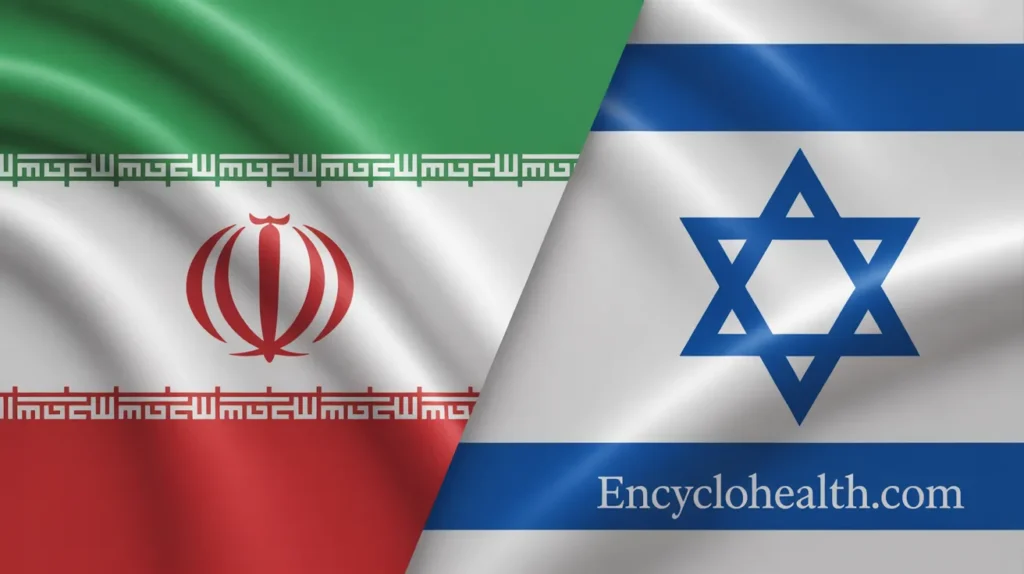
At the heart of the Iran Israel conflict is not just politics. It is ideology. Iran’s leadership views the existence of Israel as fundamentally unjust and sees its destruction as a religious and political duty. Israel, on the other hand, sees a nuclear-armed Iran as an existential threat, one that could literally wipe it off the map.
This is not a conflict where both sides are simply arguing over land or trade. The core disagreement is about whether each other has the right to exist at all. That makes it uniquely dangerous and uniquely difficult to resolve through normal diplomacy.
The Proxy War Strategy: Iran’s Regional Network
One of the most important things to understand about the Iran Israel conflict is that Iran does not fight Israel directly, at least not most of the time. Instead, Iran has built what analysts call the “Axis of Resistance,” a network of armed groups spread across the Middle East.
These groups include:
- Hezbollah in Lebanon, arguably Iran’s most powerful proxy
- Hamas and Palestinian Islamic Jihad in Gaza
- The Houthis in Yemen
- Various Shia militias in Iraq and Syria
Through these groups, Iran applies constant pressure on Israel without putting Iranian soldiers directly in the line of fire. It is a smart, patient strategy that has worked for decades. Israel has responded with its own approach, striking Iranian assets and proxy forces across Syria regularly.
Hezbollah: Iran’s Most Dangerous Tool Against Israel
Hezbollah deserves special attention when talking about the Iran Israel conflict. This Lebanese militant group, armed and funded by Tehran, has an estimated arsenal of over 150,000 missiles pointed at Israel. That is not a small number. That is a strategic deterrent.
Israel fought a major war with Hezbollah in 2006. The outcome was messy for both sides. Since then, both have been building up capabilities while trying to avoid another direct war. But in the aftermath of the 2023 Gaza conflict, the situation along Israel’s northern border became dangerously hot again.
The Nuclear Question: Why the World Holds Its Breath
When people talk about the Iran Israel conflict, the nuclear issue always comes up. And for good reason. Iran has been advancing its nuclear program for decades. As of 2025, Iran is considered a “threshold” nuclear state, meaning it has enough enriched uranium to build a bomb relatively quickly if it chose to.
Israel has made it crystal clear, in public and in private, that it will never allow Iran to acquire nuclear weapons. This is not a bluff. In 1981, Israel destroyed Iraq’s Osirak nuclear reactor. In 2007, it struck a suspected nuclear site in Syria. Many analysts believe Israel has already conducted covert operations to slow Iran’s nuclear progress, including the assassination of Iranian nuclear scientists.
Can Diplomacy Solve the Nuclear Standoff?
The short answer is: it has not worked so far. The 2015 nuclear deal, known as the JCPOA, was a significant diplomatic achievement. It placed limits on Iran’s nuclear activities in exchange for sanctions relief. But the United States withdrew from the deal in 2018 under President Trump, and Iran gradually abandoned most of its commitments in response.
Talks to revive the deal have stalled repeatedly. Iran wants full sanctions removal first. The West wants verifiable limits on enrichment first. Israel opposes any deal that does not permanently prevent Iran from having bomb-making capability. It is a deadlock that has no easy exit.
2024 and 2025: Escalation Like Never Before
The past two years have brought the Iran Israel conflict to a level of direct confrontation that would have seemed unthinkable a decade ago. In April 2024, Iran launched an unprecedented direct attack on Israeli territory for the first time in history. Over 300 drones and missiles were fired at Israel. The vast majority were intercepted, but the symbolic and strategic significance was massive.
Israel responded with a strike inside Iran shortly after. Both sides seemed to pull back from the brink, but the message was clear. The shadow war had become a real war, at least briefly.
Then came further exchanges tied to the broader Gaza conflict, Hezbollah strikes from Lebanon, Houthi missile attacks from Yemen, and Israeli operations across the region. The Iran Israel confrontation had essentially gone regional and multi-front.
What Happened in 2025 So Far
As of early 2025, the Iran Israel situation remains volatile. Ceasefire arrangements in Gaza have shifted the dynamic somewhat, but Iran’s network remains active. Israeli airstrikes on Iranian-linked targets in Syria have continued. Intelligence operations, cyberattacks, and targeted killings remain part of the ongoing confrontation.
The Biden administration’s handling of the situation, followed by the return of Trump to the White House, has added another layer of unpredictability. The US stance on Iran and Israel directly affects how both countries calculate their next moves.
Israel’s Military Doctrine in the Iran Conflict
Israel operates under a doctrine known as the “Begin Doctrine,” named after former Prime Minister Menachem Begin. It essentially states that Israel will not allow any hostile regional power to acquire weapons of mass destruction, full stop. This doctrine is alive and well in how Israel approaches the Iran Israel conflict today.
Israel’s military options against Iran are significant but also complicated. Iran is not next door. Striking Iranian nuclear facilities would require long-range operations, possibly over multiple countries’ airspace, with refueling challenges and massive escalation risks. Still, Israeli officials have made clear they are prepared to act unilaterally if they believe the threat becomes imminent enough.

How Iran Sees the Conflict
It is worth stepping into Iran’s perspective for a moment, not to justify it, but to understand it. Iran’s leadership genuinely believes that Israel and the United States have been trying to strangle the Islamic Republic since 1979. They point to US sanctions, covert operations, and support for Israel as evidence of a long-term regime-change strategy.
From Tehran’s point of view, the proxy network, the nuclear program, and the missile arsenal are defensive tools, not offensive ones. They are Iran’s insurance policy against what it sees as a hostile superpower and its regional ally.
This does not make Iran’s actions less dangerous or destabilizing. But it helps explain why the Iran Israel conflict is so hard to resolve. Both sides feel genuinely threatened by the other. Both are acting on what they see as rational self-defense.
The Global Stakes: Why This Conflict Affects You
You might wonder why the Iran Israel conflict should matter to you if you live far from the Middle East. Here is why it does.
Oil prices are one immediate connection. A major escalation in the region could disrupt shipping lanes and oil production, sending fuel prices up worldwide. The Strait of Hormuz, through which about 20 percent of global oil passes, sits right in this conflict zone.
Beyond energy, the conflict draws in global powers. Russia has deepened its relationship with Iran. China buys Iranian oil. The United States is treaty-bound to support Israel’s security. A major war between Iran and Israel could trigger a wider confrontation involving multiple world powers.
And then there is the nuclear dimension. An Iran with nuclear weapons would fundamentally change the balance of power in the Middle East and possibly trigger a regional arms race.
Is There Any Hope for Peace?
Honestly, in the short term, the prospects for resolution look bleak. The structural conditions that drive the Iran Israel conflict, ideology, nuclear ambition, proxy competition, and historical grievance, have not changed. If anything, they have deepened.
But history has surprised us before. Countries that were bitter enemies have found ways to coexist or even cooperate when the right conditions emerged. The Abraham Accords showed that Arab states and Israel could normalize relations. Could something similar ever happen with Iran? Most analysts say not under the current Iranian government. But governments change.
What the world needs is sustained diplomacy, credible deterrence, and enough restraint on both sides to avoid a catastrophic miscalculation. Whether that is achievable remains the most important open question in the Middle East today.
Conclusion
The Iran Israel conflict is more than a regional dispute between two countries. It is a fault line running through global politics, energy markets, nuclear nonproliferation, and the future of the Middle East. Understanding it is not optional for anyone who wants to make sense of today’s world.
What you can take away from this article is straightforward: this rivalry is deep, dangerous, and driven by factors that will not disappear overnight. It requires your attention, not just as news, but as a genuinely consequential global issue.
What do you think? Is a peaceful resolution between Iran and Israel possible in our lifetime? Drop your thoughts, share this with someone who needs to understand the conflict better, and keep asking the hard questions.
FAQs
1. What is the main cause of the Iran Israel conflict? The conflict stems from Iran’s 1979 Islamic Revolution, after which Iran declared Israel illegitimate and began supporting militant groups opposing it. Ideological, religious, and geopolitical factors all play a role.
2. Has Iran ever directly attacked Israel? Yes. In April 2024, Iran launched a direct attack on Israeli territory for the first time, firing over 300 drones and missiles. Most were intercepted by Israel and its allies.
3. Does Iran have nuclear weapons? Not yet. As of 2025, Iran is considered a threshold nuclear state, meaning it has enough enriched uranium to build a bomb relatively quickly, but has not yet done so.
4. Why does Israel consider Iran an existential threat? Iranian leaders have repeatedly called for Israel’s elimination. Iran also supports militant groups on Israel’s borders and is advancing a nuclear program, all of which Israel views as direct threats to its survival.
5. What is Hezbollah’s role in the Iran Israel conflict? Hezbollah is Iran’s most powerful proxy in Lebanon. It is armed, trained, and funded by Tehran and has an arsenal of over 150,000 missiles aimed at Israel.
6. Could the Iran Israel conflict lead to World War III? It is a concern many analysts raise. The conflict involves the US, Russia, and China indirectly. A major escalation could draw in global powers, though most experts believe both sides want to avoid all-out war.
7. What is the JCPOA and why did it fail? The JCPOA was a 2015 nuclear deal limiting Iran’s nuclear activities in exchange for sanctions relief. The US withdrew in 2018, and Iran gradually abandoned its commitments. Efforts to revive it have repeatedly stalled.
8. How does the Iran Israel conflict affect oil prices? The conflict is centered near major oil shipping routes, including the Strait of Hormuz. Any major escalation could disrupt global oil supplies and drive prices significantly higher.
9. What is Israel’s military strategy toward Iran? Israel follows the “Begin Doctrine,” which holds that it will not allow any hostile power to acquire weapons of mass destruction. This has included covert operations, cyberattacks, and the threat of preemptive military strikes.
10. What are the chances of peace between Iran and Israel? In the near term, very low. The ideological and strategic gaps are enormous. However, long-term change is possible if either government changes its fundamental position or if sustained diplomacy creates new openings.
Also Read Encyclohealth.com
Email: johanharwen314@gmail.com
Author Name: Johan Harwen
Author Bio: Johan Harwen is an international affairs writer and geopolitical analyst with over a decade of experience covering Middle Eastern politics, security conflicts, and global diplomacy. He has written for several leading publications and brings a grounded, human-centered approach to complex world events. Johan believes that understanding global conflicts is the first step toward building a more informed and peaceful world.
