Dubai Chocolate Ingredients: The Ultimate Luxury Recipe Guide 2026
Introduction
Have you seen those viral videos of Dubai chocolate breaking apart to reveal layers of crunchy, creamy filling? The sound alone is mesmerizing. But what makes these chocolates so special isn’t just their satisfying crunch or their Instagram-worthy appearance.
It’s the ingredients that set Dubai chocolate apart from anything you’ve tasted before. These aren’t your typical store-bought chocolates. They’re crafted with premium components that create an unforgettable taste experience.
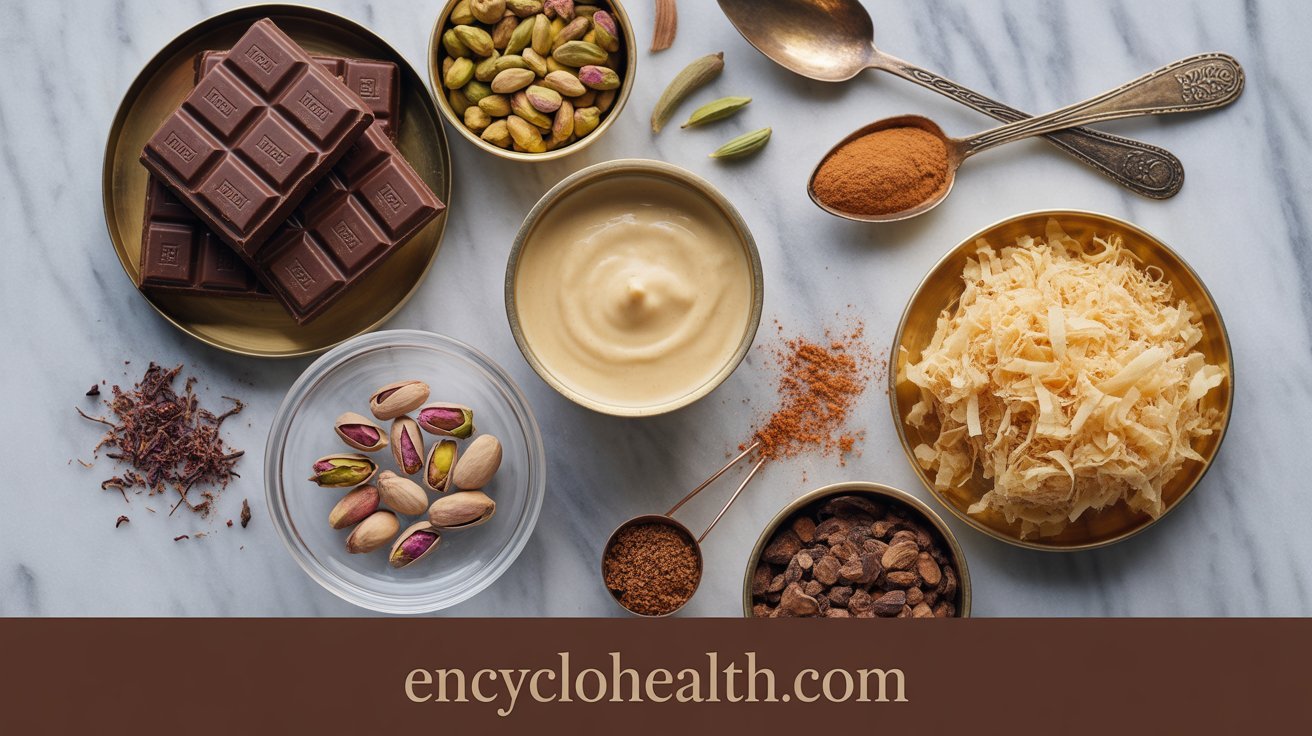
Dubai chocolate has taken social media by storm, with millions of views and people worldwide trying to recreate them. The secret lies in understanding the dubai chocolate ingredients that make these treats so extraordinary. From the specific type of chocolate coating to the unique filling combinations, every element plays a crucial role.
In this guide, you’ll discover exactly what goes into making authentic Dubai chocolate. We’ll break down each ingredient, explain why it matters, and show you how these components work together to create that signature taste and texture. Whether you want to make them yourself or simply understand what makes them special, you’re in the right place.
What Makes Dubai Chocolate Different
Before we dive into the specific ingredients, you need to understand what sets Dubai chocolate apart.
Dubai chocolate isn’t a traditional chocolate recipe passed down through generations. It’s a modern creation that went viral thanks to social media. The trend started with a specific Dubai-based chocolatier who created a unique combination of textures and flavors.
The defining characteristic is the filling. Unlike traditional filled chocolates with ganache or caramel, Dubai chocolate features a crispy, crunchy center. This texture contrast is what makes biting into one so satisfying.
The chocolate bars are typically thick and substantial. They’re not delicate bonbons or thin chocolate bars. When you break them, they reveal layers of filling that look almost architectural in their precision.
The flavor profile balances sweetness with nutty, toasted notes. There’s richness from the chocolate shell and complexity from the filling ingredients. Every bite delivers multiple textures and flavors at once.
The Essential Dubai Chocolate Ingredients
Let’s break down the core components that you’ll find in authentic Dubai chocolate.
Premium Milk Chocolate
The outer shell uses high-quality milk chocolate. This isn’t cheap candy bar chocolate. You want chocolate with a cocoa content between 30% and 40% for authentic taste.
The chocolate needs to have a smooth, creamy texture when melted. It should snap cleanly when you break it at room temperature. Belgian or Swiss chocolate brands are popular choices for making Dubai chocolate at home.
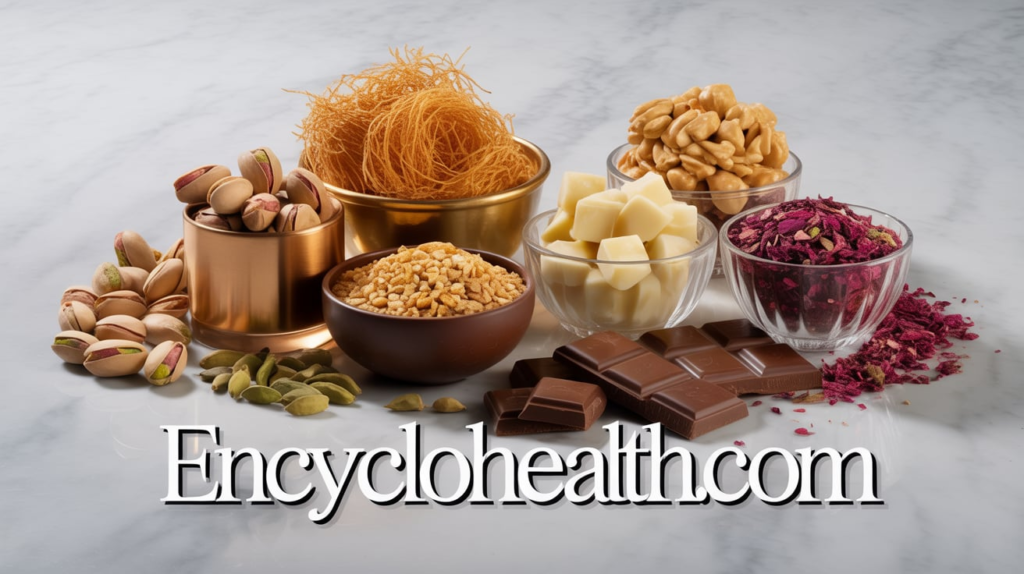
Some recipes use dark chocolate, but traditional Dubai chocolate features milk chocolate. The sweetness of milk chocolate balances the nutty filling perfectly. It also creates that creamy mouthfeel that people love.
The chocolate must temper well if you’re making professional-quality bars. Proper tempering gives the chocolate its glossy finish and satisfying snap. Without tempering, the chocolate will bloom and lose its appeal.
Kataifi Pastry (Kunafa Dough)
This is the star ingredient that creates the signature crunch. Kataifi is a shredded phyllo dough used in Middle Eastern desserts. It looks like thin angel hair pasta when raw.
You can find kataifi in Middle Eastern grocery stores or online. It’s sometimes called kunafa dough or kadaif. The strands are delicate and need gentle handling.
To prepare kataifi for Dubai chocolate, you must toast it. Raw kataifi is soft and chewy. Toasting transforms it into crispy, golden strands that add the essential crunch.
The toasting process is crucial. You can bake it in the oven or toast it in a pan with butter or ghee. The goal is to achieve a deep golden color and complete crispness. Any softness will ruin the final texture.
Tahini (Sesame Paste)
Tahini binds the filling and adds nutty depth. This sesame seed paste is common in Middle Eastern cuisine. It’s what gives hummus its characteristic flavor.
For Dubai chocolate, you want smooth, well-stirred tahini. The oil naturally separates, so mix it thoroughly before using. The consistency should be pourable but not watery.
Tahini contributes a subtle bitterness that balances the sweetness. It also adds creaminess to the filling without making it heavy. The sesame flavor complements the toasted kataifi beautifully.
Quality matters with tahini. Cheap brands can taste bitter or have a chalky texture. Look for Middle Eastern brands that list only hulled sesame seeds as the ingredient.
Pistachio Cream (Optional but Traditional)
Many Dubai chocolate recipes include pistachio cream. This isn’t just ground pistachios. It’s a smooth, spreadable paste similar to nut butter.
Pistachio cream adds a distinctive green color to the filling. More importantly, it contributes a rich, nutty flavor that’s become synonymous with luxury Middle Eastern sweets.
You can make pistachio cream by processing roasted pistachios with a bit of oil. Alternatively, buy pre-made pistachio spread from specialty stores. The commercial versions are smoother and more convenient.
Some recipes skip pistachio cream entirely and rely solely on tahini. This creates a more neutral-colored filling but still tastes delicious. The choice depends on your preference and budget.
Butter or Ghee
Fat is essential for toasting the kataifi and enriching the filling. Traditional recipes use ghee, which is clarified butter common in Middle Eastern and South Asian cooking.
Ghee has a higher smoke point than regular butter. It adds a nutty, caramelized flavor when you toast the kataifi. The clarification process removes milk solids, making it more stable.
Regular butter works too if you can’t find ghee. Use unsalted butter so you can control the salt level. The butter helps the kataifi toast evenly and adds richness to the overall flavor.
Some recipes add extra melted butter or ghee to the filling mixture. This helps everything bind together and creates a more luxurious mouthfeel. Don’t overdo it, or the filling becomes greasy.
Sweeteners
The filling needs sweetness to balance the tahini’s bitterness. Different recipes use different sweeteners. Some use powdered sugar for smooth integration.
Honey is another option that adds floral notes. It also helps bind the filling ingredients. The moisture from honey can affect texture, so use it sparingly.
Some chocolatiers add condensed milk for sweetness and creaminess. This creates a richer, more indulgent filling. It also helps achieve the right consistency.
The amount of sweetener depends on your chocolate’s sweetness. If using very sweet milk chocolate, you need less sweetener in the filling. Taste as you go and adjust accordingly.
Salt
A pinch of salt is crucial. It might seem minor, but salt enhances all the other flavors. It prevents the chocolate from tasting one-dimensionally sweet.
Salt also highlights the nutty notes in the tahini and pistachios. It creates depth and complexity. Without it, Dubai chocolate tastes flat.
Use fine sea salt or table salt for even distribution. Flaky salt doesn’t dissolve well in the filling. Save fancy finishing salts for sprinkling on top if desired.
Be conservative with salt initially. You can always add more, but you can’t remove it. Start with a quarter teaspoon and adjust after tasting.
The Supporting Ingredients
Beyond the essentials, several optional ingredients can enhance your Dubai chocolate.
Vanilla Extract
A splash of vanilla rounds out the flavors. It adds warmth and depth without being identifiable. Vanilla makes chocolate taste more chocolatey and fills taste richer.
Use pure vanilla extract, not imitation. The quality difference is noticeable in a recipe with so few ingredients. You only need a teaspoon or less.
Cardamom
Ground cardamom adds an aromatic, slightly floral note. It’s common in Middle Eastern sweets. A tiny amount goes a long way.
Cardamom pairs beautifully with chocolate and pistachios. It adds an exotic element that makes the chocolate feel more special. Use freshly ground if possible.
Start with just an eighth of a teaspoon. Cardamom can overpower other flavors if you’re not careful. You want a subtle hint, not a dominant presence.
Rose Water or Orange Blossom Water
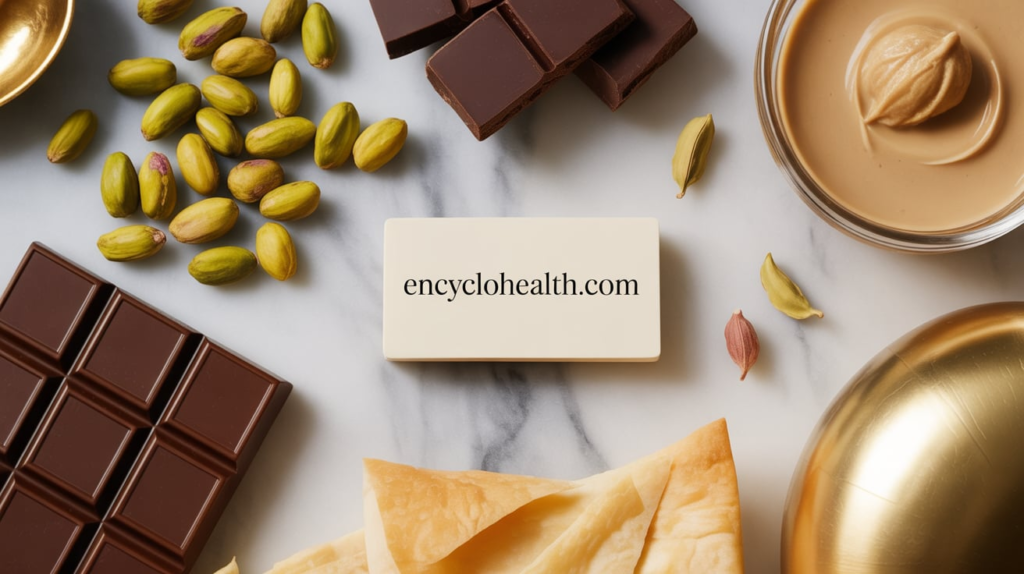
These floral waters are optional but traditional in Middle Eastern desserts. They add a delicate, perfumed quality. A few drops are sufficient.
Too much floral water makes chocolate taste soapy. This is a common mistake. When in doubt, use less. You can always add more to the next batch.
Crushed Pistachios
Some recipes add chopped pistachios to the filling for extra crunch. This increases the pistachio flavor and adds visual appeal.
Use roasted, unsalted pistachios. Chop them coarsely so they maintain some texture. Too fine, and they disappear into the mixture.
You can also sprinkle crushed pistachios on top of the chocolate before it sets. This creates a decorative finish and signals the flavor inside.
Food Coloring
While not traditional, some makers add green food coloring to enhance the pistachio appearance. This is purely aesthetic. Natural pistachio cream already has a green tint.
If using food coloring, choose gel over liquid. Gel won’t affect the filling’s consistency. Use a toothpick to add tiny amounts until you reach the desired shade.
How the Ingredients Work Together
Understanding the science behind Dubai chocolate helps you appreciate why each ingredient matters.
The chocolate shell provides structure. It holds everything together and creates the first taste impression. When you bite through it, the shell should crack cleanly.
The toasted kataifi supplies the signature crunch. Its hollow structure traps air, creating lightness despite the rich filling. The toasting process caramelizes the dough, adding complex flavors.
Tahini acts as a binder and flavor base. Its thickness helps the filling hold its shape inside the chocolate shell. The sesame flavor ties everything together.
The sweeteners balance the bitterness. They also affect texture, making the filling more spreadable or firmer depending on what you use.
Fats from butter or ghee coat your mouth pleasantly. They carry flavors and create richness. They also help the filling blend smoothly with the crispy kataifi.
Salt and aromatics like vanilla or cardamom enhance everything. They prevent flavor fatigue and add layers of complexity. Even though you use small amounts, their impact is significant.
Ingredient Quality and Sourcing
The quality of your Dubai chocolate ingredients directly affects the final product.
For chocolate, avoid compound chocolate or candy melts. These contain vegetable oils instead of cocoa butter. They lack the flavor and texture of real chocolate.
Look for chocolate with cocoa butter listed as the primary fat. Check the label for quality indicators. Belgian, Swiss, and French chocolate brands typically maintain high standards.
For kataifi, freshness matters. Old kataifi can taste stale even after toasting. Buy from stores with good turnover. Middle Eastern markets usually have fresher stock than general supermarkets.
Tahini brands vary significantly in quality. Taste a few if possible. Some are bitter or gritty, while others are smooth and balanced. Premium brands cost more but make better chocolate.
If using pistachio cream, consider making your own for the freshest flavor. Roast raw pistachios at 325°F for about 10 minutes. Process them with a bit of neutral oil until smooth.
Common Ingredient Substitutions
Not everyone has access to specialty ingredients. Here are some substitutions that work.
If you can’t find kataifi: Shredded phyllo dough is similar. Some people use toasted vermicelli noodles, though the texture differs. Crispy rice cereal can work in a pinch but changes the character.
If you can’t find tahini: Almond butter or cashew butter can substitute. The flavor will differ, but you’ll still get creaminess and nuttiness. Avoid peanut butter as it’s too strong.
If you can’t find pistachio cream: Make your own or use almond paste. Some recipes skip it entirely. You can also increase the tahini and add pistachio extract for flavor.
If you can’t find ghee: Regular melted butter works fine. You can also use coconut oil, though it adds a slight coconut taste. Vegetable oil is neutral but lacks butter’s flavor.
For sweeteners: If you don’t have powdered sugar, blend granulated sugar until fine. If you don’t have honey, use maple syrup or agave. Each brings slightly different flavors.
The Role of Temperature
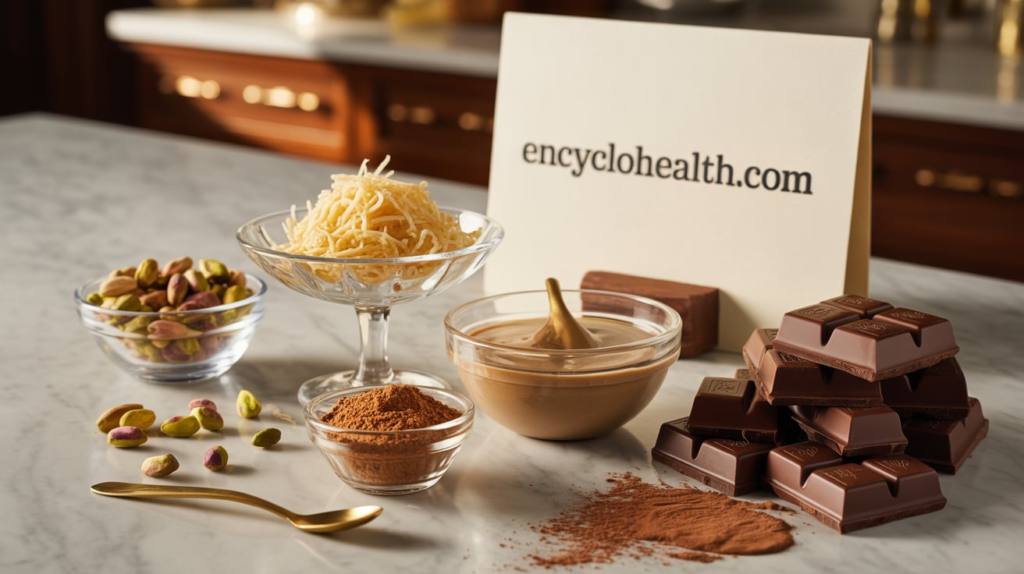
Temperature control is crucial when working with Dubai chocolate ingredients.
Your chocolate must be at the right temperature for molding. Too hot, and it won’t set properly. Too cool, and it becomes too thick to work with.
For tempered chocolate, you’re aiming for specific temperatures. Milk chocolate should be around 84-86°F for working. This requires a thermometer for precision.
The filling should be at room temperature when you assemble the chocolate. Cold filling can cause the chocolate shell to seize. Warm filling can melt the chocolate.
Toasted kataifi should cool completely before mixing with other filling ingredients. If it’s warm, it can soften from the moisture in tahini or pistachio cream.
Store finished Dubai chocolate at room temperature, not in the refrigerator. Cold temperatures cause chocolate to bloom and lose its shine. They also make the filling hard and less enjoyable.
Balancing the Ingredient Ratios
The proportion of ingredients affects texture and flavor significantly.
Most recipes use equal parts toasted kataifi and tahini by weight. This creates a filling that’s cohesive but still very crunchy. Too much tahini makes it pasty. Too little, and it falls apart.
If adding pistachio cream, use about half as much as the tahini. Too much pistachio cream overwhelms the other flavors. It also makes the filling too soft.
For chocolate-to-filling ratio, the shell should be about 40% of the total weight. Thicker shells are easier to work with but less interesting to eat. Thinner shells showcase the filling better.
Sweetness is personal preference. Start with two to three tablespoons of powdered sugar per cup of filling mixture. Taste and adjust. Remember, the chocolate shell adds sweetness too.
Specialty Ingredient Variations
Some chocolatiers create unique versions with different Dubai chocolate ingredients.
Dark chocolate shells appeal to those who prefer less sweetness. Use 60-70% dark chocolate for a more sophisticated flavor. This works well with sweeter fillings.
White chocolate versions exist but are less traditional. White chocolate is very sweet, so reduce the sugar in your filling. The contrast with tahini’s bitterness can be interesting.
Hazelnut variations swap pistachio cream for hazelnut spread. This creates a different flavor profile but maintains the luxurious feel. Hazelnuts pair beautifully with chocolate.
Date-filled versions add chopped dates to the filling. Dates are beloved in Middle Eastern cuisine. They add natural sweetness and chewy texture.
Saffron-infused chocolate uses saffron in the filling or the chocolate itself. Saffron is extremely expensive but adds a unique flavor and golden color.
Understanding Ingredient Costs
Dubai chocolate isn’t cheap to make, primarily due to ingredient costs.
Quality chocolate ranges from $10 to $30 per pound. You need about eight ounces for a standard bar. That’s $5 to $15 just for the chocolate shell.
Kataifi costs $8 to $15 per pound. You use only a few ounces per bar, but the overall cost adds up. It’s not something most people have on hand.
Tahini varies from $5 to $15 for a jar. Better brands cost more but taste significantly better. You’ll use a few tablespoons per bar.
Pistachio cream is the most expensive ingredient if you’re buying it ready-made. A small jar can cost $15 to $25. Making your own saves money but requires raw pistachios, which aren’t cheap either.
Overall, making Dubai chocolate at home costs $5 to $10 per bar. Commercial versions sell for $15 to $40 or more. The markup covers labor, packaging, and brand value.
Storage and Shelf Life of Ingredients
Properly storing Dubai chocolate ingredients ensures the best results.
Chocolate should be stored in a cool, dry place away from strong odors. Chocolate absorbs smells easily. Wrap it tightly in plastic or store it in an airtight container.
Kataifi can be frozen if you won’t use it immediately. Thaw it in the refrigerator overnight before using. Don’t refreeze once thawed.
Tahini lasts for months at room temperature before opening. After opening, refrigerate it to prevent the oils from going rancid. Bring it to room temperature before using.
Pistachio cream should be refrigerated after opening. The natural oils can oxidize and develop off-flavors. Use it within a few months for best quality.
Finished Dubai chocolate lasts two to three weeks at room temperature. Store in an airtight container away from heat and humidity. The kataifi may lose some crispness over time.
Conclusion
Understanding Dubai chocolate ingredients helps you appreciate why these treats have captured global attention. It’s not just clever marketing. The combination of premium chocolate, crispy kataifi, creamy tahini, and luxurious pistachio cream creates something genuinely special.
Each ingredient plays a specific role in creating that perfect bite. The chocolate provides structure and initial sweetness. The kataifi delivers satisfying crunch. The tahini and pistachio cream add depth and richness. Together, they create a multi-sensory experience.
Whether you decide to make Dubai chocolate at home or simply want to understand what makes them special, knowing the ingredients gives you new appreciation. These chocolates represent a modern twist on traditional Middle Eastern flavors and techniques.
If you’re inspired to try making them yourself, start with quality ingredients. Don’t cut corners on the chocolate or tahini. The investment pays off in flavor and texture.
Have you tried Dubai chocolate yet? What ingredient surprises you most about these viral treats? The combination is truly unique in the world of confections.
Frequently Asked Questions
What is the main ingredient in Dubai chocolate filling?
The main Dubai chocolate ingredients in the filling are toasted kataifi (shredded phyllo dough) and tahini (sesame paste). The kataifi provides the signature crunch, while tahini binds everything together and adds nutty flavor. Many recipes also include pistachio cream, which adds richness and the distinctive green color. These ingredients create the unique texture that makes Dubai chocolate different from traditional filled chocolates.
Can I make Dubai chocolate without kataifi?
While kataifi is the authentic ingredient, you can substitute it with shredded phyllo dough, toasted vermicelli noodles, or even crispy rice cereal. However, these substitutions will change the texture and flavor. Kataifi has a unique delicate crunch when toasted that’s difficult to replicate. If you’re making it at home and can’t find kataifi, phyllo dough is your best alternative as it’s the most similar.
Where can I buy Dubai chocolate ingredients?
You can find most Dubai chocolate ingredients at Middle Eastern grocery stores or online retailers. Kataifi and tahini are specialty items typically found in ethnic markets. Amazon and specialty food websites also carry these ingredients. Premium chocolate can be purchased at gourmet food stores, baking supply shops, or online. Pistachio cream is available at Middle Eastern markets or can be made at home using roasted pistachios.
Is Dubai chocolate very expensive to make at home?
Making Dubai chocolate at home costs approximately $5 to $10 per bar, depending on ingredient quality and where you shop. The most expensive components are quality chocolate, pistachio cream, and kataifi. However, this is still much cheaper than buying finished Dubai chocolate, which can cost $15 to $40 or more per bar. The initial ingredient investment seems high, but you can make multiple bars from one shopping trip.
What type of chocolate is best for Dubai chocolate?
High-quality milk chocolate with 30-40% cocoa content works best for authentic Dubai chocolate. Belgian, Swiss, or French chocolate brands are excellent choices. The chocolate should contain cocoa butter, not vegetable oils. Avoid compound chocolate or candy melts. Some people prefer dark chocolate for a less sweet version, but traditional Dubai chocolate uses milk chocolate because its creaminess balances the nutty filling perfectly.
Can Dubai chocolate be made vegan?
Yes, you can make vegan Dubai chocolate by using dairy-free chocolate for the shell and ensuring your other ingredients are plant-based. Tahini is naturally vegan, and you can use vegan butter or coconut oil instead of ghee. Many pistachio creams are vegan, but check labels. The kataifi dough is typically vegan as well. The main challenge is finding good-quality vegan chocolate that melts and tempers properly.
Why is tahini important in Dubai chocolate?
Tahini serves multiple crucial functions in Dubai chocolate. It binds the crispy kataifi strands together so the filling holds its shape inside the chocolate shell. It adds a nutty, slightly bitter flavor that balances the sweetness of the chocolate. Tahini also contributes creaminess without dairy, making the filling smooth and rich. Without tahini, the filling would be dry and crumbly rather than cohesive and luxurious.
How long does homemade Dubai chocolate last?
Homemade Dubai chocolate lasts two to three weeks when stored properly at room temperature in an airtight container. Keep it away from heat, humidity, and direct sunlight. Don’t refrigerate Dubai chocolate as this causes the chocolate to bloom and lose its glossy appearance. The kataifi may gradually lose some crispness over time, so Dubai chocolate is best enjoyed within the first week for optimal texture.