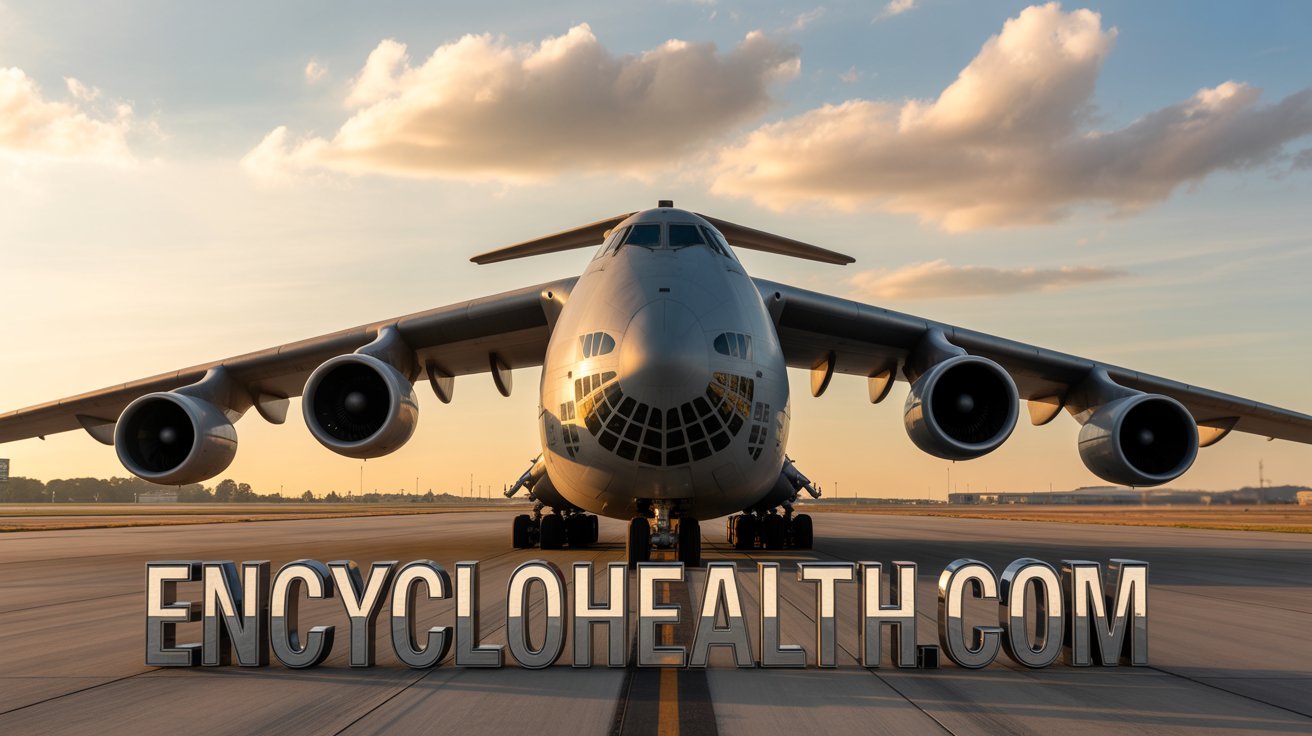
C5 Galaxy: The Powerful Beast That Dominates Military Skies in 2026
Introduction
Imagine a plane so massive it can swallow two M1 Abrams tanks whole, carry six Apache helicopters, and still fly across continents without breaking a sweat. That is exactly what the C5 Galaxy does — and it does it better than almost anything else in the sky.
If you have ever looked up and seen a shadow so large it blocked the sun, there is a good chance a C5 Galaxy was overhead. This aircraft is not just big. It is a flying fortress of logistics that has kept the U.S. military running for over 50 years.
In this article, you will learn everything worth knowing about the C5 Galaxy. We cover where it came from, how it works, what it can carry, where it has served, and why it still matters today. Whether you are a military aviation fan or simply curious about the world’s largest strategic airlifters, you are in the right place.
What Is the C5 Galaxy? A Quick Overview
The C5 Galaxy is a strategic heavy-lift transport aircraft built by Lockheed (now Lockheed Martin) for the United States Air Force. Its job is simple on paper but enormous in practice: move massive cargo and troops anywhere on Earth, fast.
It holds the title of the largest aircraft in the U.S. Air Force inventory. Nothing in the American military fleet comes close to matching its sheer size and payload capacity. The Air Force uses it to move tanks, helicopters, satellites, vehicles, and even humanitarian aid across the globe.
You can think of it as the backbone of America’s strategic airlift system. Without the C5 Galaxy, projecting military power across oceans would become far slower and far more expensive.

The History of the C5 Galaxy: From Cold War Necessity to Modern Icon
Why the U.S. Military Needed the C5
The story of the C5 Galaxy starts in the early 1960s. The Cold War was at its peak. The Vietnam War was escalating. The U.S. military realized it had a serious problem: it could not move heavy equipment fast enough to faraway conflict zones.
The existing fleet of transport planes, like the C-141 Starlifter, could carry troops and standard cargo. But they could not handle oversized, heavy equipment like tanks and large helicopters. The military needed something much bigger.
The U.S. Air Force launched a competition known as the CX-HLS (Cargo Experimental-Heavy Logistics System) program. The requirements were almost unbelievable. The new aircraft had to carry 125,000 pounds of cargo over 8,000 miles. It also had to handle twice that load over shorter distances.
Boeing, Douglas, and Lockheed all competed for the contract. Lockheed won in October 1965 with a design that pushed aviation engineering to its limits.
The First Flight and Early Service
The first C5A Galaxy rolled out of the Lockheed factory in Marietta, Georgia, in 1968. President Lyndon B. Johnson attended the rollout ceremony. The aircraft took its first flight on June 30, 1968 — and the world of military aviation changed forever.
The C5 entered full service with the U.S. Air Force in 1970. Within months, it was already flying missions in Vietnam. Its first official combat support mission took place on July 9, 1970, in Southeast Asia. The military quickly realized it had a game-changer on its hands.
A total of 81 C-5A aircraft were delivered between 1969 and 1973. The nickname “Galaxy” came from a Lockheed employee contest. The winning entry earned its author a $500 savings bond.
The C-5B and the Push for More
By the 1980s, the Air Force wanted more. President Ronald Reagan approved a production restart in 1982. Lockheed built 50 updated C-5B aircraft, featuring improved engines, avionics, and structural enhancements. These planes were faster, more reliable, and easier to maintain than their predecessors.
At peak operations in the early 2000s, over 120 C5 Galaxy aircraft were in active use across 15 squadrons. Six squadrons flew under Air Mobility Command, six under the Air Force Reserve Command, and three under the Air National Guard.
The C-5M Super Galaxy: The Modern Standard
The latest and most advanced version is the C-5M Super Galaxy. This modernized variant features new General Electric F138-GE-100 engines, upgraded avionics, and significantly improved reliability. The upgrades transformed an aging fleet into a cutting-edge transport system for the 21st century.
The C-5M began entering service in 2005. By 2007, nearly all airframes had been upgraded to this configuration. Today, the U.S. Air Force operates 52 C-5M aircraft across nine squadrons. They are based primarily at Travis AFB in California, Dover AFB in Delaware, and Westover ARB in Massachusetts.
C5 Galaxy Specs: The Numbers That Will Blow Your Mind
You cannot talk about the C5 Galaxy without talking about its specs. These numbers make it one of the most extraordinary machines ever built.
Key Technical Specifications:
- Wingspan: 222.8 feet
- Length: 247.8 feet
- Height: 65.1 feet
- Maximum Takeoff Weight: 840,000 pounds
- Maximum Payload: 285,000 pounds
- Cruise Speed: Mach 0.77 (approximately 518 mph)
- Range with 120,000 lb cargo: 5,524 miles
- Service Ceiling: 45,000 feet
- Engines: Four GE Aviation F138-GE-100 turbofans, each producing 50,580 lb of thrust
- Crew: Two pilots, two flight engineers, three loadmasters
The cargo compartment alone is 121 feet long, 13.5 feet high, and 19 feet wide. That is more than 31,000 cubic feet of interior cargo space. You could fit a row of school buses inside with room to spare.
What Can the C5 Galaxy Actually Carry?
Here is where things get truly impressive. The C5 Galaxy can transport cargo that no other U.S. military transport aircraft can handle:
- 2 M1 Abrams main battle tanks
- 6 AH-64 Apache helicopters
- 4 M2 Bradley fighting vehicles
- 7 MRAP armored vehicles
- 36 standard cargo pallets
- 81 troops along with cargo simultaneously
The nose of the aircraft opens upward like a clamshell. The tail also opens with a full-width ramp. This means you can drive vehicles in through the front and out through the back. That design saves enormous time during military operations when speed matters most.
The Kneeling Gear System
One of the smartest design features on the C5 Galaxy is its “kneeling” landing gear. The aircraft can lower itself when parked on the ground. This brings the cargo deck down to truck-bed height. Ground crews can roll vehicles and cargo directly on board without any special equipment. It sounds simple, but in the field this feature saves hours.

The C5 Galaxy in Combat and Global Operations
The C5 Galaxy has never been a frontline fighter. But it has been present in almost every major U.S. military operation since 1970. Its role is to make sure frontline forces have what they need, when they need it, wherever they are.
Vietnam War
The C5 flew its first combat support missions during Vietnam. It transported tanks, armored vehicles, and large military equipment that no other plane could carry. Soldiers in Southeast Asia received supplies that would have taken weeks to arrive by sea. The C5 compressed that timeline to hours.
During the final weeks of the war, C5s were also used in evacuation efforts as Saigon fell. These were desperate and dangerous missions flown under extreme pressure.
Operation Nickel Grass: The Yom Kippur War
Perhaps the most famous mission in C5 Galaxy history came during the 1973 Yom Kippur War. Israel was under attack from multiple Arab nations and was running critically low on ammunition and equipment. The U.S. launched Operation Nickel Grass to resupply Israel by air.
C5 Galaxy aircraft flew non-stop across the Atlantic, delivering ammunition, tanks, artillery, and military hardware directly to Israeli forces. Israeli Prime Minister Golda Meir later said about the aircraft: “For generations to come, all will be told of the miracle of the immense planes from the United States.”
That quote captures exactly what the C5 means in a crisis: it is a lifeline delivered from the sky.
Gulf War and Desert Storm
During the 1991 Gulf War, C5 Galaxies were essential. They moved tens of thousands of troops and massive quantities of equipment from the United States to the Middle East in a compressed timeline. The buildup of U.S. forces for Operation Desert Storm depended heavily on C5 airlift capacity.
Coalition forces needed tanks, helicopters, spare parts, and ammunition — fast. The C5 Galaxy delivered.
Afghanistan and the Global War on Terror
In the years following September 11, 2001, C5 Galaxy aircraft flew constantly. They moved personnel and equipment to Afghanistan and Iraq, sustaining military operations across two war zones simultaneously. The sheer logistical demand of those wars made the C5’s payload capacity more valuable than ever.
Humanitarian Missions
The C5 Galaxy is not only a weapon of war logistics. It has also delivered hope. The aircraft airlifted relief supplies to Rwanda in 1994. It transported aid to Japan after the 2011 Fukushima nuclear disaster. It has responded to earthquakes, floods, and famines around the world.
When disaster strikes and no road can reach the affected area, the C5 Galaxy is often one of the first responders.
Inflight Refueling: A Limitless Range
One of the most powerful capabilities of the C5 Galaxy is its ability to refuel in flight. The aircraft was actually the first military transport ever designed with aerial refueling capability built in from the start. That distinction matters.
With aerial refueling, the C5 Galaxy has virtually unlimited range. The only real limit is crew endurance. On long missions, relief crews fly along so the aircraft can stay airborne for extended periods without landing.
This capability means the U.S. military can send a C5 to essentially any point on the globe within hours. No layovers. No ground delays in foreign airports. Just a straight flight from base to destination.
The MADAR System: High-Tech Reliability
Operating an aircraft the size of a city block requires sophisticated onboard diagnostics. The C5 Galaxy uses a system called MADAR — Malfunction Detection Analysis and Recording System. This system monitors more than 800 test points across the aircraft’s various subsystems simultaneously.
When something goes wrong, MADAR identifies the faulty component, records the failure data, and guides maintenance crews directly to the problem. This system dramatically reduces downtime and keeps aircraft in the air more reliably. For a fleet that must be ready at a moment’s notice, that kind of reliability is not optional — it is essential.
C5 Galaxy vs. Other Giant Transport Aircraft
How does the C5 Galaxy stack up against its global peers?
C5 Galaxy vs. Antonov An-124
The Russian-built Antonov An-124 Ruslan is the C5’s closest competitor in terms of raw payload capacity. The An-124 can carry slightly more cargo by maximum weight, but the C5 has the advantage of aerial refueling and full integration with U.S. military command systems.
C5 Galaxy vs. C-17 Globemaster III
The C-17 Globemaster III is the C5’s smaller sibling in the U.S. Air Force fleet. The C-17 is more versatile and can land on shorter, less-prepared runways. However, it carries significantly less cargo. When you need to move the heaviest equipment possible, the C5 Galaxy wins every time.
Think of the C-17 as the delivery van and the C5 Galaxy as the 18-wheel freight truck. Both serve a purpose. But only one moves truly massive loads.
Why the C5 Galaxy Still Matters Today
You might wonder why a design from the 1960s still flies in the 2020s. The answer is simple: nothing has replaced it.
The C5M Super Galaxy remains the largest aircraft in the U.S. Air Force inventory. No other aircraft in the American fleet can carry two main battle tanks across the ocean in a single sortie. No other plane can transport disassembled satellites or oversized vehicles at the scale the C5 handles routinely.
The modernization program that created the C-5M extended the aircraft’s service life well into the 2040s. New engines, improved avionics, and structural upgrades have transformed the original airframe into a competitive 21st-century transport system.
The C5 Galaxy fleet is leaner today — 52 aircraft compared to the 120-plus that once served. But each aircraft is more capable, more reliable, and more efficient than ever before.
Interesting Facts About the C5 Galaxy
Here are a few details that even aviation fans sometimes miss:
- The wingspan of the C5 Galaxy is longer than the Wright Brothers’ first flight in 1903. That flight covered only 120 feet. The C5 wingspan is 222.8 feet.
- The aircraft has 28 wheels. This massive undercarriage distributes the enormous weight across the runway and allows operations from semi-prepared surfaces.
- A crew of seven operates the aircraft: two pilots, two flight engineers, and three loadmasters.
- The upper deck carries crew rest areas and seating for troops during long missions.
- The success of the original TF39 engines on the C5A led directly to the development of the CF6 engine family, which now powers commercial aircraft including the Boeing 767 and the Airbus A310.
Conclusion
The C5 Galaxy is more than an aircraft. It is a symbol of American military reach and logistical dominance. From Vietnam to the Gulf War, from the Yom Kippur crisis to humanitarian disasters, this giant has shown up when it mattered most.
You now know the full story: where it came from, what it can do, and why it is still flying strong more than five decades after its first flight. The C5 Galaxy did not just change military aviation. It redefined what strategic airlift means.
If you found this article useful, share it with a fellow aviation enthusiast. And if you have ever seen a C5 Galaxy take off in person, you know there is nothing quite like watching something that big leave the ground. What is the most impressive piece of military aviation you have ever witnessed? Let us know in the comments.

Frequently Asked Questions About the C5 Galaxy
1. What is the C5 Galaxy used for? The C5 Galaxy is a strategic military transport aircraft used to move oversized cargo, heavy military equipment, troops, and humanitarian supplies across intercontinental distances.
2. How big is the C5 Galaxy? It is 247.8 feet long with a 222.8-foot wingspan and stands 65.1 feet tall. Its cargo hold alone is 121 feet long with more than 31,000 cubic feet of usable space.
3. How much can the C5 Galaxy carry? The C5 Galaxy can carry a maximum payload of up to 285,000 pounds. That includes cargo combinations like two M1 Abrams tanks or six Apache helicopters.
4. How fast does the C5 Galaxy fly? The C5M Super Galaxy cruises at approximately Mach 0.77, which equals about 518 miles per hour.
5. How many C5 Galaxy aircraft does the U.S. Air Force operate? As of the most recent data, the U.S. Air Force operates 52 C-5M Super Galaxy aircraft across nine squadrons.
6. Can the C5 Galaxy refuel in flight? Yes. The C5 Galaxy was the first military transport designed with inflight refueling capability from the start. With aerial refueling, its range is effectively unlimited.
7. What is the difference between the C5A, C5B, and C5M? The C5A was the original production model. The C5B was an upgraded version built in the 1980s with improved engines and avionics. The C5M Super Galaxy is the fully modernized current variant, re-engined with GE F138 turbofans for improved reliability and performance.
8. What famous military operations involved the C5 Galaxy? Major operations include the Vietnam War, Operation Nickel Grass (1973 Yom Kippur War resupply to Israel), Operation Desert Storm, and ongoing support for operations in Afghanistan and Iraq.
9. How many C5 Galaxy aircraft were built? A total of 131 C5 Galaxy aircraft were produced across two main variants: 81 C-5A models and 50 C-5B models, built between 1968 and 1989.
10. Is the C5 Galaxy the largest plane in the world? It is the largest aircraft in the U.S. Air Force inventory. While aircraft like the Antonov An-225 Mriya technically had a larger wingspan and payload, the C5 Galaxy remains among the largest operational military transport aircraft in the world.
also read: encyclohealth.com
email: johanharwen@314gmail.com
Author Name: James Hartwell
About the Author: James Hartwell is a military aviation writer and aerospace analyst with over 10 years of experience covering U.S. Air Force platforms and defense technology. He has contributed to several aviation publications and brings a passion for making complex aerospace topics accessible to everyday readers. When he is not writing, he can be found at airshows across the country.