NBIS Stock Forecast: Shocking Growth or Dangerous Gamble in 2026
Introduction
If you have been watching the AI sector, you already know how fast things move. But few stories in recent years are as dramatic as the rise of Nebius Group and its stock ticker, NBIS. The company went from a suspended, geopolitically complicated stock to one of the hottest names in AI infrastructure — all in under two years.
So what does the NBIS stock forecast actually look like right now? Is this a once-in-a-decade opportunity, or are you stepping into a minefield of hype and risk?
This article breaks it all down for you. You will get the latest analyst price targets, real revenue numbers, growth catalysts, key risks, and a clear picture of what the next 12 to 24 months could look like for NBIS investors. Whether you are just hearing about Nebius for the first time or you already hold shares, this guide will help you make sense of the noise.
What Is Nebius Group and Why Does It Matter?
Before we dig into forecasts, let us make sure we are on the same page about what Nebius actually does.
Nebius Group N.V. trades on the Nasdaq under the ticker NBIS. The company started its life as the parent of Yandex, Russia’s biggest tech company. After Russia’s invasion of Ukraine triggered sanctions and geopolitical chaos, the company restructured dramatically. It carved out its Western operations and relaunched as a pure-play AI infrastructure business based in Amsterdam.
Today, Nebius operates what it calls a “full-stack AI cloud.” That means it builds and runs data centers powered by high-end GPU clusters, then rents that compute power to AI companies, startups, enterprises, and now hyperscalers like Meta and Microsoft.
Think of it as a purpose-built power plant for artificial intelligence workloads. Everything from training large language models to running inference at scale.
The company also operates several subsidiary brands:
- Nebius AI — the core AI cloud platform
- Toloka AI — data labeling and annotation for generative AI
- TripleTen — an edtech platform focused on tech career re-skilling
- Avride — an autonomous driving technology unit
The AI cloud segment is the dominant driver of growth, accounting for roughly 94% of total revenue.
NBIS Stock Performance: How Far Has It Come?
The stock’s history reads like a comeback story.
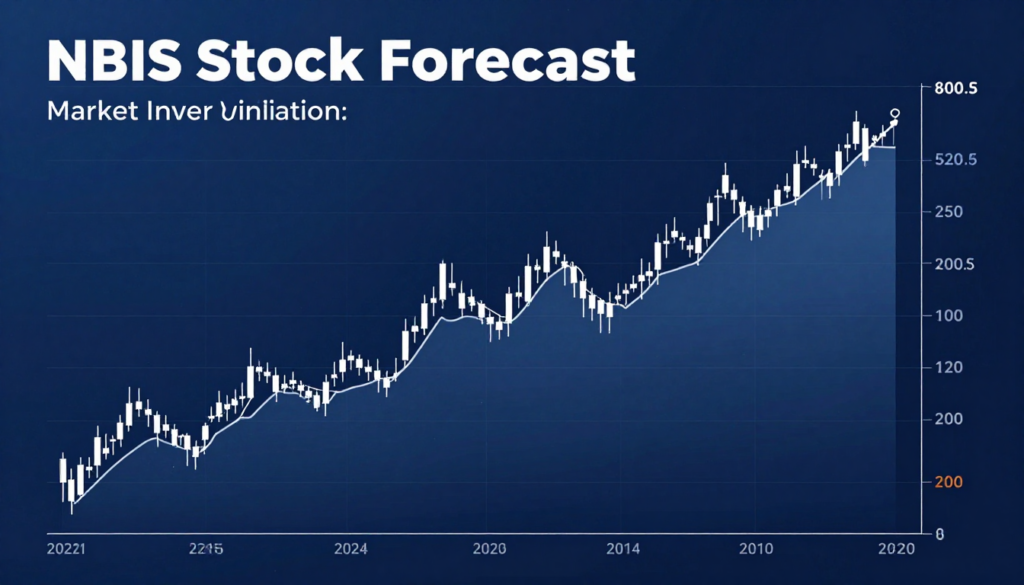
NBIS rose 38.5% in 2024, then exploded 174% in 2025. By May 2026, the stock had already climbed more than 120% year-to-date, trading near $179. Over the past 12 months, the total gain has exceeded 550%.
That kind of performance turns heads. It also raises a fair question: has the easy money already been made?
To answer that, you need to understand what is driving the growth.
The Revenue Story: Numbers That Are Hard to Ignore
Here is where things get genuinely interesting.
Nebius reported full-year 2025 revenue of $529.8 million. That was a 479% increase year-over-year. In Q4 2025 alone, the company posted $227.7 million in revenue, up 547% from the same quarter a year earlier. Core AI cloud revenue within that quarter grew 830% year-over-year.
To put that into plain English: Nebius is not gradually growing. It is scaling at a pace that most companies never see.
The company ended 2025 with an Annual Recurring Revenue (ARR) of $1.25 billion, beating its own guidance. For 2026, management has set a target of $7 billion to $9 billion in ARR by year-end, with more than half of that already contracted.
Revenue guidance for full-year 2026 sits between $3.0 billion and $3.4 billion. And the company expects to hit roughly 40% adjusted EBITDA margins by late 2026 as its newest GPU clusters come fully online.
These are not small numbers. These are numbers that explain why so many analysts have Buy ratings on the stock.
What Are Analysts Saying About the NBIS Stock Forecast?
Let us look at the current analyst consensus, because it tells an interesting story.
According to data from multiple sources, 11 out of 16 analysts covering NBIS have given it a Buy rating. Four analysts say Hold, and just one says Sell. The consensus price target sits around $166 to $179 per share, though individual targets range widely.
Here is a quick breakdown of where different forecasters stand:
- Bank of America raised its price target to $205 from $175 and keeps a Buy rating
- TradingView consensus from 17 analysts puts the average target at $179.15, with a high estimate of $291 and a low of $110
- Motley Fool analysis suggested NBIS could reach $276 per share by end of 2026 if the company hits consensus revenue estimates and trades at 20 times sales
- 24/7 Wall Street takes a contrarian view, rating NBIS a Sell and projecting 43% downside to a 12-month target of $99.71
So you have a wide gap between bulls and bears. That gap tells you something important: NBIS is not a boring, consensus stock. It is high-conviction on both sides.
The bull case rests on explosive revenue growth, sold-out capacity, massive contracted revenue, and the AI infrastructure megatrend. The bear case focuses on extreme valuation, capital intensity, and execution risk.
Key Growth Catalysts Driving NBIS Higher
If you are trying to understand why so many investors are excited about NBIS, start with these five catalysts.
1. The Meta and Microsoft Mega-Contracts
Nebius signed a multi-year AI infrastructure agreement with Microsoft worth billions, committing to deliver dedicated GPU capacity from its New Jersey data center. Around the same time, the company secured a massive multi-year contract with Meta Platforms worth an estimated $12 to $27 billion, depending on the source, to provide AI capacity across multiple locations.
These are not one-time orders. They are long-term commitments that anchor the company’s revenue base.
2. NVIDIA’s $2 Billion Strategic Investment
In March 2026, NVIDIA invested $2 billion in Nebius and designated it as a “Preferred Provider.” This is significant for two reasons. First, it gives Nebius priority access to GPU hardware during shortages, a real competitive advantage when demand for AI chips far exceeds supply. Second, it signals NVIDIA’s confidence in Nebius as a major infrastructure partner.
3. Sold-Out Capacity Across the Board
Management has said repeatedly that they sell out every unit of capacity they bring online. As of Q1 2026, the company remained sold out. The commercial pipeline exceeds $4 billion, deal durations are getting longer, and customers are increasing order sizes. This is a demand-driven story, not a supply-push one.
4. Massive Infrastructure Expansion
Nebius has secured more than 2 gigawatts of contracted power and is targeting over 3 gigawatts by year-end 2026. The company recently broke ground on a new AI factory in Pennsylvania capable of handling up to 1.2 gigawatts of power. It also announced nine new data centers globally.
The company plans to deploy between $16 billion and $20 billion in capital expenditure in 2026 alone. That is an enormous number, but it is largely funded by customer prepayments and a robust cash position that stood at $3.7 billion at year-end 2025.
5. Q1 2026 Blowout Results
On May 13, 2026, Nebius reported Q1 2026 results that beat expectations. The company posted $399 million in revenue, roughly seven times higher than the same quarter a year earlier. Net income came in at $621 million, and cash from operations swung to $2.26 billion. These are results that justify the bullish analyst sentiment.
The Real Risks You Need to Understand
No serious NBIS stock forecast is complete without a clear-eyed look at the risks. And there are real ones.
Extreme Valuation
Even after accounting for the explosive growth, NBIS trades at a high price-to-sales ratio. When a stock is priced for perfection, any earnings miss or guidance cut can trigger a sharp sell-off. You are not buying a cheap stock here.
Capital Intensity
Spending $16 to $20 billion in a single year is an enormous bet. If data center build-outs face delays, if GPU supply chains get disrupted, or if customer demand softens even slightly, that capital can become a burden rather than an asset.
Governance Concerns
Nebius founder Arkady Volozh controls roughly 52% of voting power through Class B shares held by his family trust. The company also disclosed material weaknesses in its internal controls over fixed assets and revenue recognition at TripleTen as of December 31, 2025. These are yellow flags worth monitoring.
Competition
Nebius competes against AWS, Azure, Google Cloud, and CoreWeave. Hyperscalers have nearly unlimited capital. If they decide to compete more aggressively on GPU cloud pricing, Nebius could face pressure on margins.
Geopolitical History
The company’s origins in Yandex and its complex restructuring history mean some institutional investors remain cautious about its corporate background, even though Nebius is now a Dutch-based, Nasdaq-listed entity with Western operations.
NBIS Stock Forecast 2026: Bull, Base, and Bear Scenarios
Here is a simple way to frame the three possible outcomes for NBIS over the next 12 months.
Bull Case ($250 to $291) The company hits or beats its $7 to $9 billion ARR target. Revenue comes in at the top of guidance. Margins expand to 40% as guided. Index inclusion drives institutional buying. The stock re-rates higher. Analysts like BofA’s $205 target look conservative in hindsight.
Base Case ($165 to $205) Nebius delivers solid growth but faces some execution delays in data center build-outs. Revenue hits the midpoint of guidance. Analyst consensus holds, and the stock trades near current levels with modest upside. This is roughly where Wall Street’s average price target sits today.
Bear Case ($99 to $110) A major customer cancels or delays orders. Capital expenditure balloons without proportional revenue. Internal control weaknesses lead to a financial restatement. The stock de-rates sharply. This is the scenario 24/7 Wall Street’s model currently projects.
The wide range between these scenarios reflects genuine uncertainty. NBIS is a high-risk, high-reward stock.
Long-Term NBIS Stock Forecast: Is 2030 Worth Thinking About?
If you are a long-term investor, the 2030 picture matters too.
Goldman Sachs has highlighted that data center demand in the U.S. will outpace supply by 9 gigawatts in 2026. That structural deficit does not disappear overnight. If AI adoption continues to accelerate over the next five years, companies like Nebius that build the physical infrastructure for AI could see sustained demand for years.
One algorithm-based model projects NBIS could potentially hit $500 by April 2032. That is speculative, and long-range stock forecasts are notoriously unreliable. But the directional thesis, that AI infrastructure is a multi-decade megatrend, is hard to argue with.
What you should watch between now and 2030:
- Whether Nebius maintains its sold-out capacity status as it scales
- How margins evolve as newer GPU clusters come online
- Whether the company achieves profitability on a GAAP basis
- The competitive response from hyperscalers
- Governance improvements and resolution of internal control weaknesses
Should You Buy, Hold, or Sell NBIS?
This is the question everyone wants answered. I am not a financial advisor, and nothing here is investment advice. But here is a practical framework to help you think it through.
You might be comfortable buying NBIS if:
- You have a high risk tolerance and a multi-year time horizon
- You believe AI infrastructure demand will stay structurally supply-constrained
- You are comfortable with significant volatility
- You can afford to lose the investment if the bear case plays out
You might want to hold and watch if:
- You already have a position and want to see Q2 2026 results before adding more
- You are waiting to see whether the ARR target of $7 to $9 billion becomes more visible
- The valuation feels stretched to you but you believe in the long-term thesis
You might want to avoid or reduce if:
- Capital preservation is your priority
- You cannot stomach 40% to 50% drawdowns
- You are uncomfortable with the governance structure and internal control issues
The honest answer is that NBIS is one of the most exciting, and one of the most volatile, growth stocks in the market right now. Size your position accordingly.
Conclusion
The NBIS stock forecast is a story of extraordinary growth potential colliding with extraordinary risk. Revenue is growing at hundreds of percent per year. Analyst consensus leans bullish. The AI infrastructure megatrend is real and accelerating. Strategic partnerships with NVIDIA, Meta, and Microsoft give Nebius a credibility and scale that few competitors can match.
At the same time, the stock trades at a premium valuation, the company is burning capital at a historic rate, and the gap between bull and bear price targets is wider than most stocks you will ever look at.
If you are the kind of investor who likes to understand exactly what you own and why, NBIS rewards that approach. The details matter. The execution will matter even more.
Are you currently invested in NBIS, or are you watching from the sidelines? Drop your thoughts below or share this with someone who is watching the AI infrastructure space. The conversation around this stock is just getting started.
Frequently Asked Questions
1. What is the current NBIS stock price target from analysts? The consensus price target from Wall Street analysts currently sits around $166 to $179 per share. Individual targets range from $110 on the low end to $291 on the high end, depending on the analyst and their model assumptions.
2. Is NBIS a buy or sell right now? The majority of analysts, 11 out of 16, rate NBIS a Buy. One analyst rates it a Sell. The recommendation depends heavily on your risk tolerance and investment horizon. NBIS is a high-growth, high-risk stock.
3. What does Nebius Group actually do? Nebius Group builds and operates AI-focused data centers powered by GPU clusters. It rents that compute capacity to AI companies, startups, and enterprise clients. It also operates subsidiary brands in data labeling, edtech, and autonomous driving.
4. How fast is Nebius growing? Nebius reported 479% revenue growth for full-year 2025. In Q4 2025, revenue grew 547% year-over-year. Q1 2026 showed roughly seven times the revenue of the same quarter a year earlier.
5. What is Nebius’s revenue target for 2026? The company has guided for $3.0 billion to $3.4 billion in revenue for full-year 2026 and an ARR of $7 billion to $9 billion by year-end, with more than half already contracted.
6. What is the biggest risk for NBIS investors? The biggest risks include extreme valuation relative to current profits, massive capital expenditure requirements, execution risk in data center build-outs, competition from AWS and Azure, and governance issues including material weaknesses in internal financial controls.
7. Who are Nebius’s biggest customers? Microsoft and Meta Platforms are among the largest customers, with multi-year, multi-billion-dollar contracts. NVIDIA has also made a $2 billion strategic investment in the company.
8. Does NBIS pay a dividend? No. Nebius Group does not pay a dividend. The company is reinvesting all capital into infrastructure expansion. Dividends are not expected in the near term.
9. What is Nebius’s long-term stock forecast for 2030? Long-term forecasts are highly speculative. Some algorithmic models suggest NBIS could trade significantly higher by 2030 if AI infrastructure demand remains strong and the company executes on its growth plan. Others are more cautious and project meaningful downside from current levels.
10. Is NBIS a good long-term investment? That depends on your view of the AI infrastructure megatrend and your risk appetite. The company is well-positioned in a rapidly growing sector with strong partnerships. However, it remains unprofitable on a GAAP basis, trades at a high valuation, and carries significant execution and governance risks.
also read: encyclohealth.com
email: johanharwen@314gmail.com
Author Name: Sarah Merritt
About the Author : Sarah Merritt is a financial content writer and market analyst with over eight years of experience covering technology stocks, emerging growth companies, and AI-driven investment trends. She has written for leading finance publications and specializes in making complex market data accessible to everyday investors. Sarah holds a degree in Economics and is based in New York.