Is Famotidine a PPI? The Surprising Truth You Must Know in 2026
Introduction
You grab a box of famotidine at the pharmacy. The label says “acid reducer.” You have heard your doctor mention PPIs. Now you are wondering: is famotidine a PPI, or is it something completely different?
You are not alone. This is one of the most common questions people ask about heartburn and acid reflux medication. And the confusion is totally understandable. Both famotidine and PPIs reduce stomach acid. Both treat similar symptoms. But they work in very different ways, and the difference actually matters for your health.
In this article, you will learn exactly what famotidine is, what PPIs are, how the two compare, and which one might suit your situation better. We will also clear up common myths and answer the questions people ask most often. By the end, you will have a clear, confident answer.
What Is Famotidine? A Simple, Clear Breakdown
Famotidine is a medication that reduces the amount of acid your stomach produces. It belongs to a drug class called H2 blockers, which is short for histamine-2 receptor antagonists. You may know it by its most popular brand name, Pepcid.
H2 blockers work by targeting specific receptors in your stomach lining. These receptors respond to a chemical called histamine. When histamine attaches to them, your stomach produces acid. Famotidine blocks those receptors, which means less histamine gets through, and your stomach makes less acid as a result.
Here is what famotidine is commonly used for:
- Heartburn and acid indigestion
- Gastroesophageal reflux disease (GERD)
- Peptic ulcers (stomach and duodenal ulcers)
- Zollinger-Ellison syndrome, a rare condition that causes too much acid production
- Prevention of stress ulcers in hospital settings
Famotidine is available over the counter in 10 mg and 20 mg doses. It is also available in stronger prescription doses of up to 40 mg. It works relatively quickly, usually within one to three hours of taking it.
So, Is Famotidine a PPI?
No. Famotidine is not a PPI.
This is the short answer, and it is clear cut. Famotidine is an H2 blocker. PPIs are a completely separate class of medication. They work through a different mechanism, have a different chemical structure, and produce different effects in your body.
To understand why this matters, you need to know what a PPI actually is.
What Are PPIs? Understanding the Other Class
PPI stands for proton pump inhibitor. These medications block an enzyme in your stomach called the proton pump. That enzyme is directly responsible for releasing acid into your stomach. By blocking the pump itself, PPIs reduce acid production more aggressively and for a longer period of time compared to H2 blockers like famotidine.
Common PPIs include:
- Omeprazole (Prilosec)
- Esomeprazole (Nexium)
- Pantoprazole (Protonix)
- Lansoprazole (Prevacid)
- Rabeprazole (AcipHex)
- Dexlansoprazole (Dexilant)
PPIs take longer to start working, often 24 to 72 hours to reach full effect. However, once they kick in, they provide stronger and more sustained acid suppression than H2 blockers.
Famotidine vs PPIs: The Key Differences You Should Know
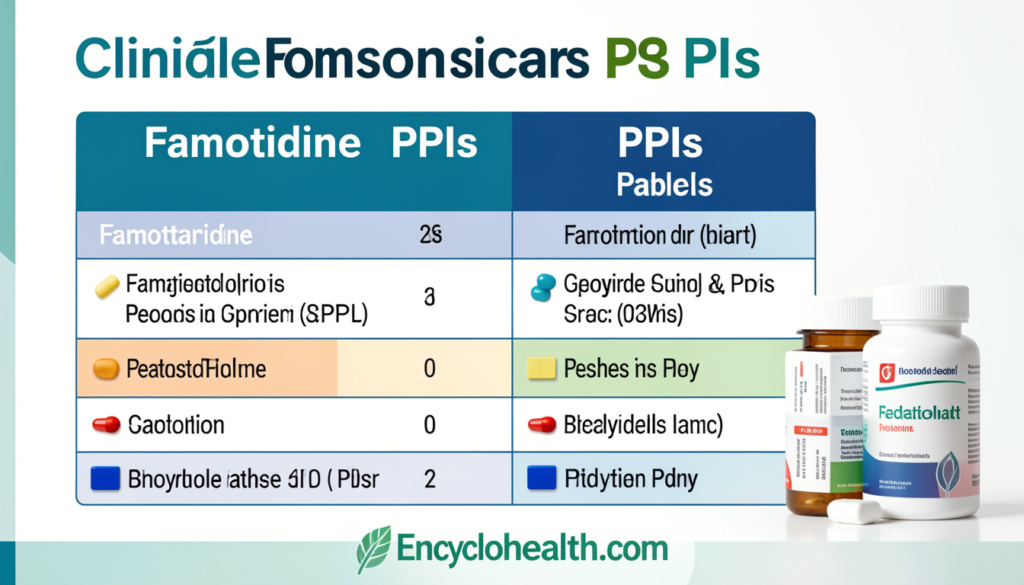
Understanding the difference between famotidine and PPIs helps you make a smarter decision about your acid reflux treatment. Here is a side by side comparison.
How They Work
Famotidine blocks histamine receptors. It stops histamine from triggering acid release. PPIs block the proton pump directly. They shut down the final step in acid production. Think of it this way: famotidine blocks a signal, while PPIs block the machine itself.
Speed of Action
Famotidine works faster. You can feel relief within 30 minutes to one hour. PPIs take longer, sometimes up to three days, to reach full effectiveness. If you need fast relief from sudden heartburn, famotidine wins.
Duration of Effect
PPIs last longer. A single dose of a PPI can suppress acid production for up to 24 hours. Famotidine typically lasts 10 to 12 hours. PPIs are generally better for ongoing, daily acid management.
Strength of Acid Suppression
PPIs are stronger. They reduce stomach acid more completely than H2 blockers. For severe GERD, erosive esophagitis, or conditions that cause extreme acid overproduction, PPIs are usually the preferred choice.
Side Effects
Both drugs are generally well tolerated. However, long-term PPI use has been linked to several concerns, including:
- Decreased magnesium and calcium absorption
- Increased risk of bone fractures
- Potential kidney issues with prolonged use
- Higher risk of certain gut infections like C. difficile
- Possible vitamin B12 deficiency
Famotidine has a lower risk profile for long-term use. It does not carry the same concerns about nutrient absorption or bone health.
Tolerance and Rebound
Some people develop tolerance to H2 blockers like famotidine over time. This means the medication becomes less effective with regular use. PPIs do not have this tolerance issue, but stopping them abruptly can cause acid rebound, where your stomach temporarily overproduces acid.
When Should You Choose Famotidine Over a PPI?
Famotidine is often the better choice in specific situations. Here is when it tends to shine.
You need fast, occasional relief. If heartburn hits you after a spicy meal or late-night snack, famotidine gives you quicker relief than a PPI.
You want an on-demand option. You can take famotidine as needed without building up to full effectiveness first. PPIs need consistent daily dosing to work properly.
You are pregnant. Famotidine is generally considered safer during pregnancy than PPIs, though you should always check with your doctor first.
You prefer fewer long-term risks. If you have concerns about bone density, kidney health, or nutrient absorption, famotidine’s lower risk profile may feel more comfortable.
Your symptoms are mild to moderate. For occasional heartburn or mild GERD, famotidine is usually effective enough without needing the heavier suppression a PPI provides.
When Are PPIs the Better Option?
PPIs are typically recommended when symptoms are more serious or persistent.
You have erosive esophagitis. This is a condition where stomach acid has actually damaged the lining of your esophagus. PPIs heal this damage more effectively.
You have been diagnosed with Barrett’s esophagus. This is a complication of long-term acid damage. Strong, consistent acid suppression with PPIs is typically required.
Famotidine has stopped working. If you notice your H2 blocker is becoming less effective over time, your doctor may switch you to a PPI.
You have a peptic ulcer caused by H. pylori. PPIs are often part of the treatment regimen because they keep the stomach environment less acidic while antibiotics do their job.
You take daily NSAIDs like ibuprofen or aspirin. PPIs are commonly used alongside these medications to protect your stomach lining from irritation.
A Common Mix-Up: Why People Think Famotidine Is a PPI
The confusion likely comes from a few sources.
First, both drug types are used for acid-related problems. If you see both on a pharmacy shelf labeled as “acid reducers,” it is easy to assume they work the same way.
Second, marketing language can be vague. Phrases like “controls acid” or “reduces stomach acid” appear on both H2 blocker and PPI packaging without making the distinction clear.
Third, doctors sometimes switch patients from one to the other without fully explaining why. If your doctor moved you from Pepcid to Nexium, it might feel like they are interchangeable, but the reasoning behind the switch matters.
I always tell people to ask one simple question when picking up a new acid medication: Is this an H2 blocker or a PPI? That single question puts you miles ahead in understanding your own treatment.
Can You Take Famotidine and a PPI Together?
Yes, in some situations doctors do recommend taking both. This is more common in hospital settings or for patients with severe acid-related conditions.
The logic is that they work on different mechanisms. Famotidine can provide faster, short-term relief while the PPI builds up to its full effect. Some research has also explored using famotidine at night alongside a daytime PPI to cover nighttime acid breakthrough, which is a real issue for some GERD patients.
However, you should never combine these medications on your own without medical guidance. Taking both unnecessarily can lead to over-suppression of acid, which brings its own risks. Your stomach does need some acid for proper digestion and to protect against certain infections.
What Research Says About Famotidine
Famotidine has been well studied over decades. It has a solid track record for safety and effectiveness.
One area of recent research involves COVID-19. Some early studies during 2020 suggested that famotidine might have antiviral properties. However, larger studies did not confirm significant benefits, and famotidine remains primarily an acid-reducing medication.
For GERD management, studies show famotidine significantly reduces acid exposure in the esophagus. A 2019 review published in the journal Alimentary Pharmacology and Therapeutics confirmed that H2 blockers remain a valid first-line option for mild to moderate GERD before stepping up to PPIs.
For ulcer healing, famotidine has shown effectiveness comparable to older H2 blockers like ranitidine (which was pulled from the market due to contamination concerns), and it continues to be widely used in peptic ulcer management.
Important Safety Reminders for Both Drug Classes
Whether you take famotidine or a PPI, keep these points in mind.
- Always follow dosing instructions on the label or from your doctor.
- Do not take higher doses than recommended.
- Tell your doctor about all other medications you take, since both H2 blockers and PPIs can interact with other drugs.
- If your symptoms persist for more than two weeks without improvement, see a healthcare provider.
- Chronic acid reflux is not just uncomfortable. Left untreated, it can cause serious damage to your esophagus over time.
- Do not use these medications to delay evaluation of serious symptoms like difficulty swallowing, unexplained weight loss, or black stools. These need medical attention right away.
Conclusion
So, is famotidine a PPI? The clear answer is no. Famotidine is an H2 blocker. It works differently, acts faster, and carries a different risk profile than proton pump inhibitors. Both classes of medication reduce stomach acid, but they take very different paths to get there.
Famotidine is a reliable, fast-acting option for occasional heartburn and mild to moderate acid reflux. PPIs are stronger and better suited for chronic, severe, or complicated acid-related conditions. Knowing the difference helps you have a smarter conversation with your doctor and make better choices for your own digestive health.
If you are still unsure which option is right for you, talk to your pharmacist or doctor. They can help you choose based on your symptoms, medical history, and how often you deal with acid issues.
Did this clear things up for you? Share this article with someone who is confused about their heartburn medication. You might save them a lot of unnecessary guesswork.
FAQs: Is Famotidine a PPI?
1. Is famotidine the same as omeprazole? No. Famotidine is an H2 blocker and omeprazole is a PPI. They reduce stomach acid but work through completely different mechanisms. Famotidine acts faster, while omeprazole provides stronger and longer-lasting acid suppression.
2. Is Pepcid a PPI? No. Pepcid is the brand name for famotidine, which is an H2 receptor antagonist, not a proton pump inhibitor. It is often confused with PPIs because both treat acid reflux, but they are different drug classes.
3. Which is safer: famotidine or PPIs? Both are generally safe for short-term use. Famotidine has a lower risk profile for long-term use. Long-term PPI use has been associated with nutrient deficiencies, bone issues, and kidney concerns. Talk to your doctor about what is safest for your situation.
4. Can famotidine be taken daily? Yes, famotidine can be taken daily, but it may become less effective over time due to tolerance. Your doctor can guide you on the best dosing schedule for your needs.
5. How quickly does famotidine work? Famotidine usually starts working within 30 minutes to one hour. Its effects last for about 10 to 12 hours, making it a good choice for quick, temporary relief.
6. Is famotidine good for GERD? Yes. Famotidine can be effective for mild to moderate GERD. For severe or chronic GERD with esophageal damage, a PPI is often a better long-term option.
7. What is the difference between H2 blockers and PPIs? H2 blockers like famotidine block histamine receptors that signal acid production. PPIs block the proton pump, which is the final step in acid secretion. PPIs are stronger and longer-lasting; H2 blockers work faster.
8. Can you take famotidine and a PPI together? In some medical situations, yes. Doctors may combine them for better acid control in severe cases. You should not combine them without medical guidance, as unnecessary over-suppression of acid can cause problems.
9. Does famotidine cause rebound acid? Rebound acid is more commonly associated with PPIs when they are stopped abruptly. Famotidine is less likely to cause significant rebound acid, though stopping any acid-reducing medication can sometimes lead to temporary increases in symptoms.
10. Is famotidine safe during pregnancy? Famotidine is generally considered safer than PPIs during pregnancy, but you should always consult your doctor before taking any medication while pregnant.
also read: encyclohealth.com
email: johanharwen@314gmail.com
Author Name: Dr. Leila Hassan, PharmD
About the Author : Dr. Leila Hassan, PharmD Dr. Leila Hassan is a clinical pharmacist with over 10 years of experience in gastroenterology and medication therapy management. She is passionate about translating complex medical information into clear, practical guidance for everyday readers. Dr. Hassan has contributed to patient education programs at multiple healthcare institutions and writes regularly on digestive health, medication safety, and evidence-based wellness.